

Medizinische Fakultät der Universität Augsburg

General Information
The Faculty of Medicine at the University of Augsburg is one of Germany’s newest and most innovative medical schools. Founded in 2016, it has quickly established itself as a pioneer in "Modern Medicine" by replacing the traditional subject-based curriculum with a fully Competency-Based Model Program. With a massive new medical campus and a focus on Environmental Health and Medical Informatics, Augsburg is designed for the future of digital and sustainable healthcare.
General Info
- Established: 2016 (Faculty founded); 2019 (Model program launched).
- Primary Location: > Stenglinstraße 2, 86156 Augsburg, Germany (Medical Campus).
- Academic Model: Modellstudiengang Humanmedizin (Augsburg Competency-Based Medical Program).
- Structure: A 12.5-semester program (~6.3 years).
- Longitudinal Tracks: Instead of separate years, the program uses continuous tracks for Scientific Competence (WLK I & II) and Clinical Competence starting from Semester 1.
- Organ-Centered Modules: Teaching is organized by organ systems and symptoms (e.g., "Movement," "Balance") rather than abstract subjects like anatomy or chemistry.
- Integrated Exam Model: The traditional Physikum (M1) is replaced by an integrated internal assessment system.
- Instruction: 100% German. C1 level proficiency (DSH-2, TestDaF 4x4, or Goethe C1) is a legal requirement.
- Admission: Highly restricted (Numerus Clausus). Applications are processed through Hochschulstart.de for domestic students and involve the TMS (Test for Medical Studies).
Campus Facilities
The University of Augsburg is currently completing one of the most modern medical campuses in Europe, located immediately adjacent to the University Hospital.
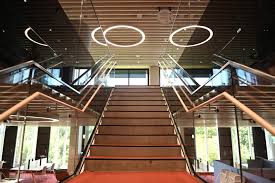
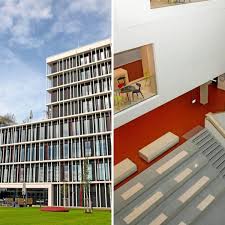
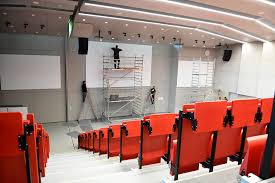
- New Teaching Building (Lehrgebäude): A flagship facility opened in late 2024, featuring high-tech lecture theaters, seminar rooms for small-group work, and student lounges.
- ZeIT (Science Hub): An interdisciplinary center designed to bridge the gap between basic research and clinical application, featuring "Core Facilities" for shared high-end equipment.
- Medical Branch Library: A state-of-the-art specialized library providing 24/7 digital access and a vast physical collection of clinical textbooks.
- VirtuaLab & GameLab: Cutting-edge facilities using Virtual Reality (VR), Mixed Reality, and gaming stations to simulate clinical environments and patient interactions.
- ObservationLab: Equipped with "Mangold Interact" software for the synchronized recording and evaluation of facial expressions and gestures in doctor-patient simulations.
- Institute of Environmental Medicine (TUNE): A leading center for "Environment-Human" interactions, focusing on how air pollutants and climate change affect human health.
- Medical Information Sciences (MIS) Hub: A dedicated research focus using AI, telemedicine, and mobile health (Apps/Wearables) to model disease outcomes.
- SkillsLab Augsburg: A modern training center where students practice invasive procedures and diagnostics on high-fidelity simulators before clinical rotations.
- Center for Electron Microscopy: A DFG-funded facility providing students and researchers with cutting-edge imaging technology for subcellular research.
- Campus Connectivity: The campus is linked to the University Hospital via a network of footpaths and is directly served by the Tram Line 2, connecting to the city center in minutes.
Hospital & Medical Facilities
Leading tertiary care hospital attached to the institution
The Universitätsklinikum Augsburg (UKA) is one of Germany’s largest hospitals and the only "Maximum Care" provider in the Swabia region:
- Capacity: Over 1,500 beds and 24 specialized departments.
- Staff: Approximately 6,000 employees, including 900 doctors and 2,500 nurses.
- Emergency Hub: Features the second-largest emergency department in Germany, treating roughly 80,000 emergency patients annually.
- Profile Centers: Specialized focus on Tumor Medicine, Vascular Medicine, and Allergology.
- Bezirkskliniken Schwaben: A major clinical partner providing 358 treatment places for specialized psychiatry and psychotherapy.
Fee Structure
State University Affordability
Augsburg is a public university in Bavaria. While there are no general tuition fees, students pay a mandatory semester contribution.
Scholarship
- Deutschlandstipendium: 300 €/month for high-achieving students showing social responsibility.
- International Office Grants: Short-term financial aid for international students in the graduation phase or in financial emergency (f.au.st e.V. association).
- Research Scholarships: Available via the ZeIT hub for students pursuing their medical doctorate (Dr. med.) in Environmental Health or Informatics.
City Details
- The Vibe: Known as the "Fugger City," Augsburg is over 2,000 years old, making it one of Germany's oldest cities. It is a UNESCO World Heritage site (for its water management) and offers a safe, green, and high-quality living environment.
- Connectivity:
- Tram Line 2: Connects the Medical Campus directly to the Central Station (Hauptbahnhof).
- Proximity to Munich: Only 30 – 45 minutes by train, allowing students to access Munich’s social scene while living in a more affordable city.
- Safety: Augsburg is consistently ranked as one of the safest cities in Germany.
Hostel & Mess
- Accommodation: Managed by Studierendenwerk Augsburg.
- Student Dorms: Rent is approximately 350 € – 450 €/month. Due to high demand, early application is essential.
- Private Housing: A room in a shared flat (WG) costs between 400 € and 600 €/month.
- Dining: The Mensa on the medical campus and the main university campus offer subsidized meals (approx. 3.50 € – 6.50 €) for students.
Miscellaneous
- APS Certificate: Mandatory for applicants from India, China, and Vietnam.
- Uni-assist: International students must apply via uni-assist for a VPD (Preliminary Review) before the university deadline.
- Deadline: July 15 for the Winter Semester (the only intake for 1st-semester medicine).
Collage Images Gallery

Facilities & Campus Life

Well-equipped Library

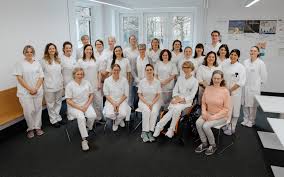
Experienced Faculty

Computer Lab

Sports Activities

Heritage Campus


Frequently Asked Questions
Why Consult With Us?
- 15+ years of experience in medical education counseling
- 5000+ students successfully guided
- 50+ partner universities worldwide
- Free initial consultation with no obligation