
1. Is Medicine at Universidad Europea taught in English?
+A: No. The official curriculum lists nearly every subject as Spanish-medium; only English for Health Sciences II is taught in English.
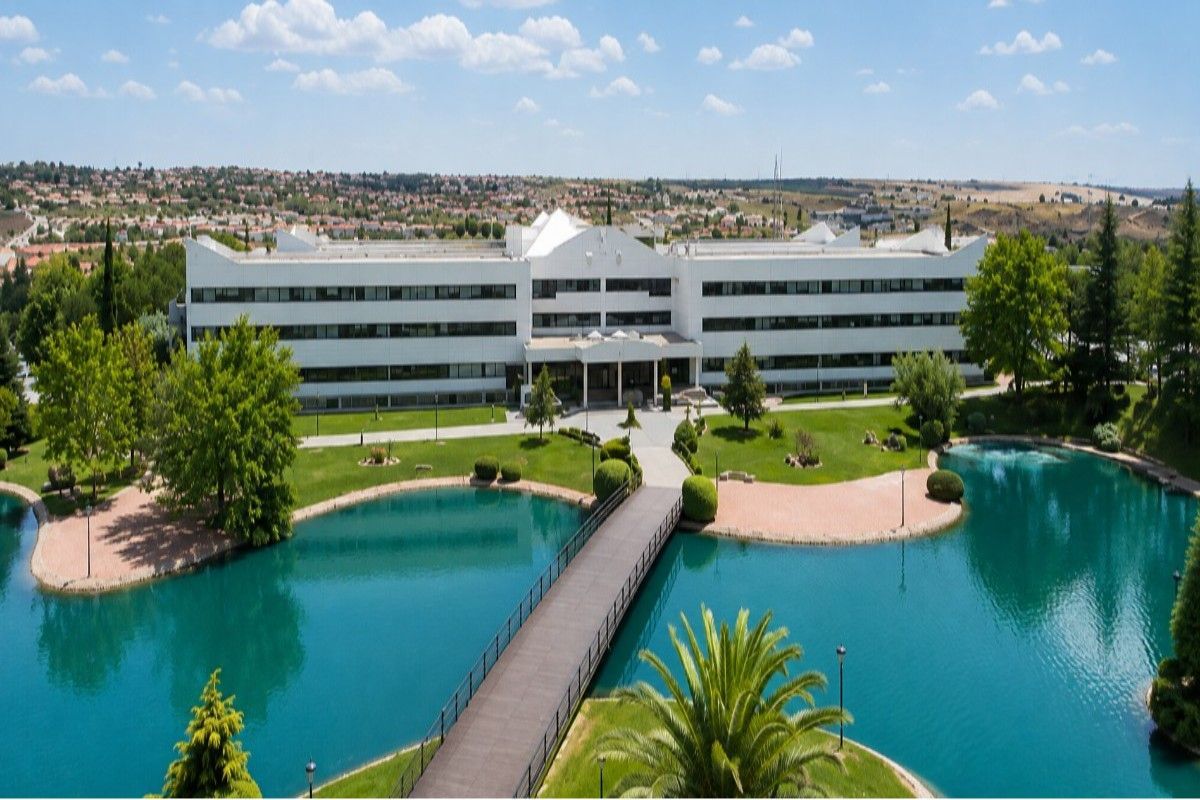
 Spain | Est. 2008
Spain | Official private university recognized by the Ministry of Science, Innovation and Universities of Spain. Medicine degree is an official state-recognized qualification under the European Higher Education Area (EHEA). | Spanish (Medicine program). Clinical training is conducted in Spanish. medium
Expert will call you within 2 hours
The Faculty of Medicine, Health and Sports of Universidad Europea de Madrid is one of the new medical schools in Spain. Despite the fact that the Medicine programme was launched in 2008, the first graduation of this programme took place in 2014. In comparison with many Spanish medical schools which have centuries of history, this is relatively a new institution. Nevertheless, in quite a short period, it became a well-equipped private medical university.
Education consultants present Universidad Europea de Madrid as an already existing medical destination where the teaching takes place in English. However, in reality, although the university offers a number of English-taught programmes in other disciplines, its Medicine degree is taught in Spanish. Therefore, students should consider the programme from the point of view of the university's official curriculum, not relying on marketing materials of some companies.
The Bachelor's Degree in Medicine, a six-year programme, is taught mainly in Spanish. Courses such as Anatomy, Physiology, Pathology, Paediatrics, and Clinical Medicine are all taught in Spanish. Despite the fact that there are such courses as English for Health Sciences, it does not mean that the programme is bilingual. In fact, this is a Spanish medium medical programme.
This aspect can also be seen from the requirements to applicants. Those applicants who are not native Spanish speakers should show their Spanish proficiency level approximately B2. Applicants are also supposed to pass English and general aptitude tests. The knowledge of English will not be the main criterion to be admitted and to succeed in the programme.
Universidad Europea de Madrid provides a private Spanish medical education with an international look. The biggest advantage of this school is its practical training environment. The campus in Villaviciosa de Odón has a very modern Simulated Hospital accredited by the Society for Simulation in Healthcare as one of the best simulation centres in Europe.
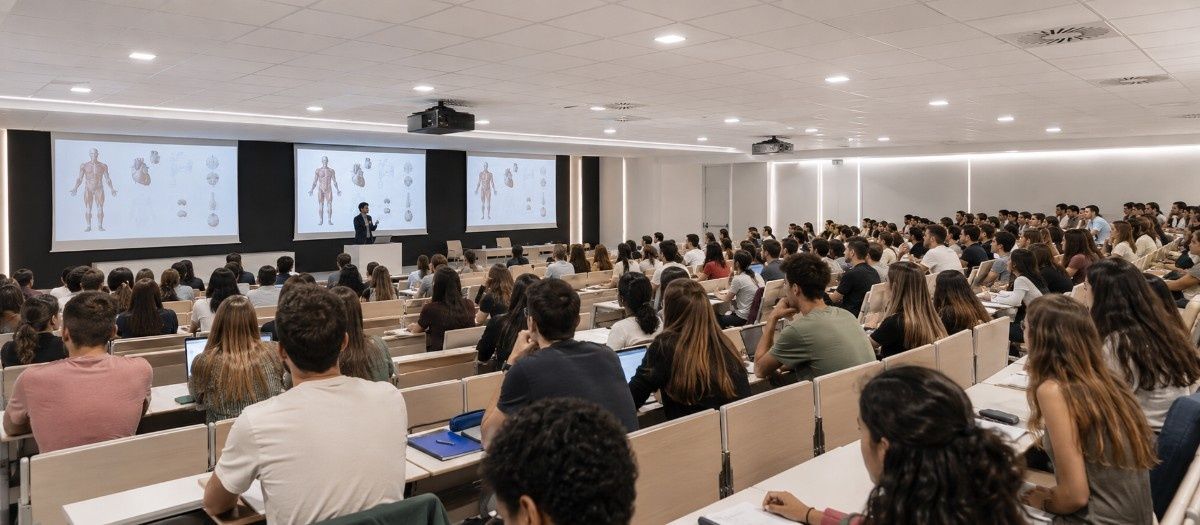
The practical training begins already in the first year and takes place in simulation wards, consultation rooms, operating theatres, intensive care units, and anatomy laboratories. From the third year, practical rotations take place in hospitals in Quirónsalud and Vithas healthcare networks as well as some public hospitals in Madrid. Besides, there is a clinical student-to-teacher ratio approximately 2:1, which allows close supervision during practical training.
As a private university, the tuition cost is significantly higher than those in Spain's public medical schools. Applicants pay approximately €3,500 reservation fee, €800 one-time registration fee, and annual tuition fee €20,760 according to the standard 60-credit academic load. In total, only tuition in the six-year programme costs more than €125,000, not counting accommodation, insurance, travel, and other expenses. It is more expensive than any programme at public universities in Spain and many programmes in private medical schools in Central Europe.
The degree is a regulated Spanish medical degree according to Orden ECI/332/2008. Graduates can take MIR examination and get postgraduate residency training in Spain and can work anywhere in the European Union and European Economic Area under appropriate regulations. Although from the publicly available data it is not clear whether the programme currently has WFME International Quality Label, this university has a great academic reputation. It is rated among the leading private universities in Spain in Medicine in the QS Subject Rankings and got five stars in the QS Stars in multiple categories.
The campus of the university is situated in the suburb town Villaviciosa de Odón, located approximately 40 minutes from Madrid's centre. Therefore, students can enjoy quiet campus environment and not city-centre life. Accommodation arranged by the university starts from approximately €1,270 per month with full board, while shared private accommodation costs between €450 and €700 per month, not counting food and other living expenses.
All things considered, Universidad Europea de Madrid is the university for those students who are ready to study medicine in Spanish and whose families are able to afford a premium private European medical education.
No hidden charges, no donation. The full picture of costs at MBBS In Universidad Europea de Madrid Facultad de Ciencias Biomedicas.
Tuition Fee
Approximately USD 30,000–32,000 per year for the Medicine program (fees vary by intake and annual university updates)
USD 30,000–32,000 per year.
Hostel Fee
Approximately USD 8,000–12,000 per year
Approximately USD 8,000–12,000 per
Food & Meals
Approximately USD 7,000–10,000 per year.
per year
Insurance
Approximately USD 500–1,000 per year.
per year
Donation
No Donation
No Hidden Fee
Total Estimated Cost
Approximately USD 45,500–55,000 per year,
6 year
25–35%
Average FMGE first-attempt pass rates for students from many overseas medical universities. Students from structured programs consistently score higher.
Students returning to India need to clear the FMGE/NExT exam. MBBS In Universidad Europea de Madrid Facultad de Ciencias Biomedicas integrates exam-oriented coaching into the regular curriculum so students are prepared from day one.
A structured program that takes you from foundational sciences to clinical mastery.
Medical Humanities and Communication Skills English for Health Sciences I (taught in Spanish)
Anatomy, Physiology, Cellular Biology, and Genetics Biochemistry I and II, and Histology
Morphology, Structure and Function of Organs and Systems I and II English for Health Sciences II (the one course taught in English)
Basic Epidemiology and Applied Biostatistics Medical Psychology and Introduction to Clinical Practice
General Pathological Anatomy and Diagnostic Imaging General Pharmacology, General Microbiology, and Basics of Surgery
Health Management and Public Health Semiology and General Pathophysiology
Haematology and Endocrine System Nephrology and Urology; Bioethics and Legal Medicine
Cardiovascular, Respiratory, and Digestive Systems Infectious Disease Pathology and Clinical Microbiology
Psychiatry and the Nervous System Paediatrics and Medical Therapeutics Research Methodology
Rheumatology, Traumatology, and Dermatology
Emergencies and Toxicology; Geriatrics, Oncology and Palliative Care Optional clinical placements: surgical skills, anaesthesiology, ICU, biomedical research
Primary Care and the End of Degree Project Obstetrics and Gynaecology, Ophthalmology, and Otolaryngology

Furnished hostel rooms with Wi-Fi, laundry, 24/7 security, and Indian mess on or near campus.
Indian restaurants and mess facilities serving vegetarian and non-vegetarian home-style food daily.
Strong Indian community with cultural events, festival celebrations, and peer support groups.
Students get hands-on clinical training in government and private hospitals affiliated with the university.
Practical information for students planning to study at MBBS In Universidad Europea de Madrid Facultad de Ciencias Biomedicas.
Prepare for all seasons. Thermal wear for winters, light clothing for summers. University provides heating in hostels.
Student visa processed with university invitation letter. Direct and connecting flights from major Indian cities.
Health insurance included in fees. Medical facility on campus plus city hospitals easily accessible.
Local SIM cards available. WhatsApp and video calls keep you connected with family back home.
Average monthly expenses of $150–$250 covering food, transport, and personal needs.
University library, online databases, and study groups. Seniors mentor juniors through academic challenges.
Our team guides you through every step — from application to arriving on campus.
Shortlist based on public vs private, the MBBS fee in Spain you’re comfortable with, city, and whether a partial-English track matters to you.
Begin DELE/SIELE B2 preparation well ahead of application deadlines.
Submit application; sit BMAT or a university-specific test where required.
Academic transcripts, NEET scorecard, language certificates, passport, and supporting documents.
Formal offer issued upon successful evaluation.
Initial steps toward having your Indian academic credentials recognised in the Spanish system.
Apply at the Spanish consulate with your offer letter, financial proof, and insurance documentation.
After arrival, register at your local town hall (ayuntamiento), a mandatory municipal registration step that most competitor guides skip entirely, but one you’ll need for everything from opening a bank account to enrolling in local healthcare.
Admission Helpline — Contact our counsellors for step-by-step assistance.
“The faculty here is incredibly supportive. The clinical training during hospital rotations has given me real confidence in patient care.”
“Affordable fees without compromising on quality. The campus facilities and hostel life made my transition abroad very smooth.”
“English medium instruction and WHO-recognized curriculum were the deciding factors for me. No regrets so far — excellent experience overall.”
“The university helped with everything from visa to accommodation. Hospital exposure from year three has been invaluable for my FMGE prep.”
“Just cleared my licensing exam on the first attempt. The structured coaching and mock exams during final year were a game-changer.”
“Safe campus, good food options, and a strong Indian student community. The teaching methodology is very practical and hands-on.”
A: No. The official curriculum lists nearly every subject as Spanish-medium; only English for Health Sciences II is taught in English.
A: Yes. Non-native speakers must pass a mandatory B2-level Spanish test as part of the entrance exam, regardless of English proficiency.
A: Through UEM's Competence and Skills Test, an English exam, a Spanish exam, and homologation of your Class 12 certificate with Spain's Ministry of Education.
A: No. Students entering through the international admissions route cannot request recognition of credits taken at any other institution.
A: Tuition alone is EUR 20,760 a year, plus a one-time EUR 3,500 reservation fee and EUR 800 registration fee before first enrolment.
A: Yes. It is a regulated qualification under Orden ECI/332/2008 and is automatically recognised across the EU and EEA.
A: Not as far as published sources indicate; UIC Barcelona was the first private Spanish faculty to receive that label.
A: From Year 3, at Quironsalud and Vithas hospitals, Hospital de Getafe, Hospital Infanta Sofia, and Madrid-region primary care centres.
A: University residences from around EUR 1,270 a month with full board, or private shared flats for roughly EUR 450-700 a month.
A: No. It is a satellite town on Madrid's western edge, roughly a 40-minute commute from the city centre.
Our expert counsellors will guide you through the complete admission process — from documents to airport pickup.