


Universitat de Barcelona Facultat de Medicina

General Information
The Faculty of Medicine and Health Sciences at the Universitat de Barcelona (UB) is widely considered the top-tier medical school in Spain and one of the best globally. Established in 1450, it combines centuries of tradition with cutting-edge clinical research, consistently ranking as the #1 medical university in Spain and within the top 100 worldwide.
For the 2025/2026 academic year, the faculty maintains its highly competitive and clinical-focused approach.
Institutional & Strategic Profile
Campus Facilities
Multi-Campus Infrastructure
The faculty is split into three main campuses, each integrated with world-renowned hospitals and research centers.
Medicine Campus (Clínic): Located in the heart of Barcelona (Carrer de Casanova). It is directly linked to Hospital Clínic de Barcelona, a global leader in high-complexity care and translational research.
Bellvitge Campus: Located in L'Hospitalet de Llobregat. It is integrated with the Hospital Universitari de Bellvitge, focusing on advanced surgical techniques and oncology.
Sant Joan de Déu Campus: Located in Esplugues de Llobregat, specifically dedicated to pediatrics and maternity through the Hospital Sant Joan de Déu, one of Europe's top pediatric centers.
Clinical training focuses heavily on high-complexity systems such as the cardiovascular network.
Hospital & Medical Facilities
Leading tertiary care hospital attached to the institution
Hospital (Clinical Teaching Units)
The UB's strength lies in its association with three of Europe's top-tier hospitals. Students are assigned to a "Teaching Unit" based in one of these centers:
Hospital Clínic de Barcelona: Frequently ranked as the best hospital in Spain. It is a global leader in high-complexity surgery and organ transplants.
Hospital Universitari de Bellvitge: A major tertiary hospital specializing in oncology, cardiology, and advanced surgical technology.
Hospital Sant Joan de Déu: One of the most important pediatric and maternity hospitals in Europe. Students interested in pediatrics receive world-class training here.
Fee Structure
State University Affordability
Tuition Fees & Estimated Costs
As a public university in Catalonia, fees are set by the regional government and are significantly subsidized for residents.
Note: Barcelona is one of the more expensive cities in Spain, so shared accommodation or university halls are common choices for students.
City Details
Hostel & Mess
Hostel and Mess
Since the UB is an urban university, it does not have a single "gated campus" for housing, but it offers extensive student services:
Hostel (Accommodation): The UB has its own "Colegios Mayores" (Residential Colleges) like Sant Jordi or Penyafort-Montserrat. These are much more than hostels; they offer meals, laundry, and academic support.
Cost: Approximately €900 – €1,200 per month (including full board).
Alternative: Many students stay in private student residences like Livensa Living or rent shared flats in the Eixample or Sants neighborhoods.
Mess (Dining): Each campus and hospital has a University Canteen.
Subsidized Meals: Students get a 3-course "Menú del Dia" for about €7.50 – €9.50. The food focuses on the Mediterranean diet, ensuring healthy options for medical students.
Miscellaneous
Admissions & Entry Requirements
Admission to the UB is the most difficult in Spain due to extremely high demand.
Entrance Grade (Nota de Corte): For 2025, the required grade was 12.85 for Campus Clínic and 12.65 for Campus Bellvitge (out of 14.0).
International Access: Non-Spanish diploma holders must process their validation through UNEDasiss.
PCE Exams: International students must take the Specific Competency Tests (PCE) in Biology and Chemistry to achieve the near-perfect scores required.
Language: While theoretical material may be in Spanish or English, Catalan is the primary language used for patient interaction in clinical rotations from the 3rd year onwards.
Collage Images Gallery





Facilities & Campus Life

Well-equipped Library

Experienced Faculty

Computer Lab

Sports Activities

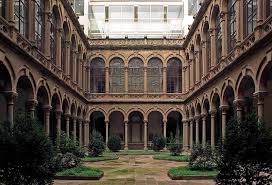
Heritage Campus


Frequently Asked Questions
Why Consult With Us?
- 15+ years of experience in medical education counseling
- 5000+ students successfully guided
- 50+ partner universities worldwide
- Free initial consultation with no obligation