


Universitat Internacional de Catalunya Facultat de Medicina i Ciències de la Salut

General Information
The Faculty of Medicine and Health Sciences at UIC Barcelona (Universitat Internacional de Catalunya) is a private, high-performance medical school known for its "Patient-Centered" philosophy. It consistently records one of the highest success rates in Spain for the national MIR residency exam (nearly 99% of students pass the cut-off).
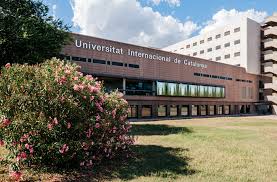
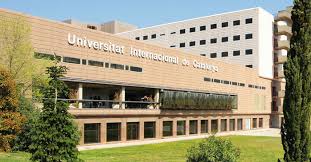
The faculty is located at the Sant Cugat Campus, specifically designed as a health sciences hub integrated within a hospital environment.
Campus Facilities
Campus & Infrastructure
The Sant Cugat campus is a technical powerhouse focused on practical immersion. It moves away from the traditional lecture-only format in favor of experimental spaces.
CISA (Advanced Simulation Center): A world-class facility spanning over 1,000 $m^2$. It replicates a real hospital with ER units, operating rooms, and consultation offices. Students practice using high-fidelity mannequins and "standardized patients" (actors) from their very first year.
Surgical & Functional Anatomy Unit: A state-of-the-art lab for dissection and anatomical study, essential for the first two years of the degree.
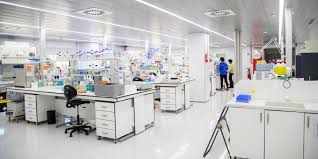
Integrated Labs: Specialized spaces for bioengineering, biomechanics, and exercise physiology.
Hospital & Medical Facilities
Leading tertiary care hospital attached to the institution
Healthcare Pillar: Teaching Hospitals
UIC Barcelona operates on a unique integration model. Because the campus is located within a hospital, students live the reality of clinical life every day.
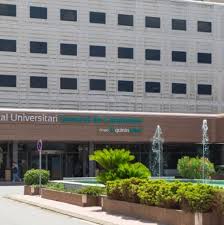
Hospital Universitari General de Catalunya: The university's main clinical base, located in the same building complex as the classrooms.
Clínica Cuides UIC Barcelona: The university's own specialized clinic focused on Palliative Care and person-centered support.
Clinical Network: The faculty has agreements with over 40 health centers and hospitals across Catalonia, allowing for over 2,200 hours of clinical practice throughout the degree.
Fee Structure
State University Affordability
Fee Structure and Costs (Estimated 2025)
As a private university, UIC has its own tuition model. While more expensive than public schools, the fees include access to elite simulation technology and individual tutoring.
Note: Living in Sant Cugat is generally quieter and slightly more expensive than some Barcelona neighborhoods, but it is exceptionally well-connected to the city center via the FGC train (25 minutes).
City Details
Hostel & Mess
Student Life: Housing & Dining
The campus is modern and designed for students who spend long hours on-site.
Accommodation:
Residència Universitària Barcelona Sant Cugat: Located very close to the campus, offering studio apartments with private kitchens.
Shared Flats: Many students live in Sant Cugat or nearby Rubí (which is much cheaper) or commute from central Barcelona (Gràcia or Sarrià areas).
Dining:
The campus canteen offers "Menú del Día" options focused on healthy nutrition for health professionals (approx. €8.00 – €10.00).
Miscellaneous
Admissions & Entry Requirements
UIC Barcelona has an independent admission process. It does not use the public "Nota de Corte."
Entrance Exams: Candidates must pass UIC’s own internal tests (Online or On-campus), which include psychometric evaluations and academic knowledge tests.
Academic Record: Your high school GPA (Bachillerato) carries significant weight (typically 70-80% of the final decision).
Language: For Medicine, a high level of Spanish is required to ensure success in clinical rotations with patients.
Deadlines: Applications for the September 2026 intake usually open in late 2025 or January 2026.
Collage Images Gallery


Facilities & Campus Life

Well-equipped Library

Experienced Faculty

Computer Lab

Sports Activities

Heritage Campus


Frequently Asked Questions
Why Consult With Us?
- 15+ years of experience in medical education counseling
- 5000+ students successfully guided
- 50+ partner universities worldwide
- Free initial consultation with no obligation