
Universitätsmedizin Göttingen Medizinische Fakultät

General Information
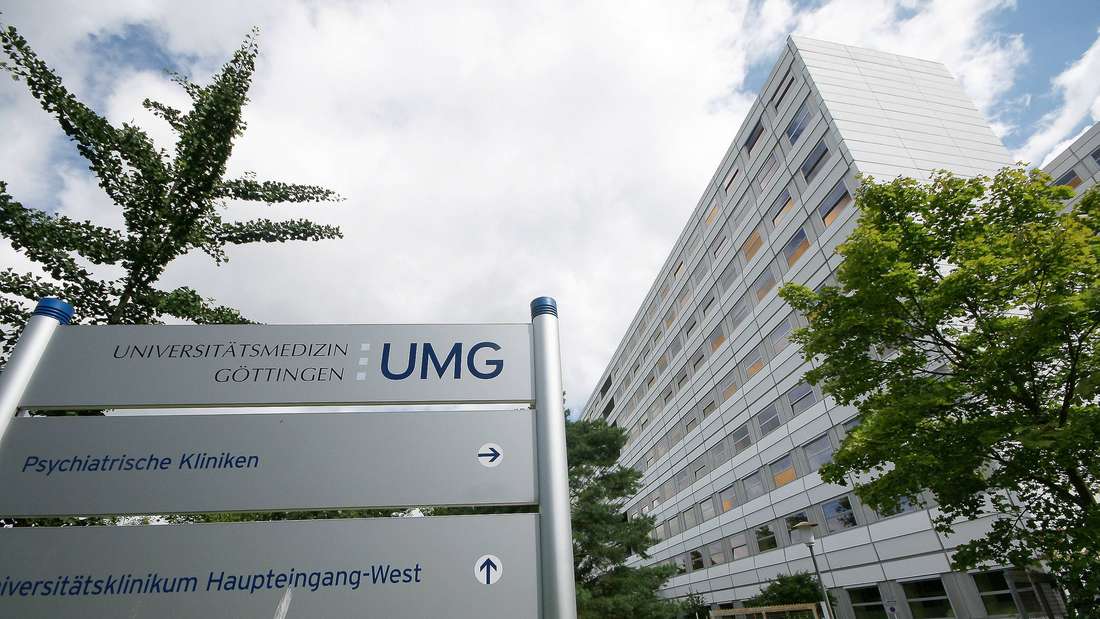
The University Medical Center Göttingen (UMG) is the medical faculty of the Georg-August-Universität Göttingen, one of Germany's most venerable research institutions. The UMG operates under an Integration Model, meaning the Faculty of Medicine and the University Hospital form a single, unified entity. It is world-renowned for its proximity to several Max Planck Institutes, creating a unique "Göttingen Campus" density of Nobel-caliber research in Neuroscience and Molecular Biology.
General Info
- Established: 1737.
- Primary Location: > Robert-Koch-Straße 40, 37075 Göttingen, Germany.
- Academic Model: Staatsexamen (German State Examination).
- Structure: A 6.3-year program (12 semesters + Practical Year).
- Pre-clinical (Years 1–2): Subject-oriented teaching in foundational sciences with early clinical exposure through "Introduction to Clinical Medicine."
- Clinical (Years 3–5): Modular and interdisciplinary curriculum. It concludes with an "Exam preparation semester" where students revisit all content through symptoms and clinical findings.
- Practical Year (PJ): The final 48 weeks of rotation at the UMG or its extensive network of teaching hospitals.
- Instruction: 100% German. C1 level proficiency (DSH-2 or TestDaF 4x4) is mandatory.
- Research Focus: Three main pillars: Neuroscience, Cardiovascular Research, and Oncology. It also hosts the Cluster of Excellence "Multiscale Bioimaging."
- Admission: Highly competitive (Numerus Clausus). UMG utilizes a specific selection procedure including the TMS and, notably, personal selection interviews for top-tier applicants.
Campus Facilities
The UMG is the heart of the "Göttingen Campus," where university facilities are intertwined with elite non-university research institutes.
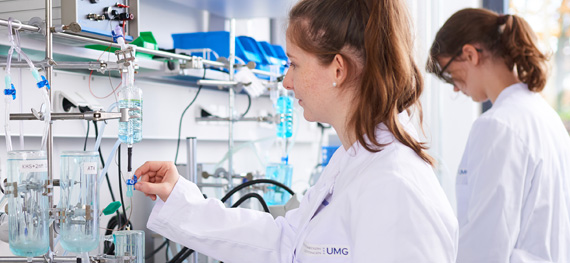
- STÄPS (Simulation Center): A high-tech training center where students practice medical procedures, from basic venous access to complex emergency scenarios.
- Lernzentrum (Learning Center): A dedicated student hub offering quiet zones, group rooms, and a massive digital library of medical journals and textbooks.
- Molecular Imaging Hub: Part of the "Multiscale Bioimaging" cluster, providing access to super-resolution microscopy and advanced PET-MRI scanners.
- Anatomical Collection: One of the oldest and most significant in Germany, used actively for both historic and modern morphological study.
- Biomedical Physics Lab: Where medical students collaborate with physicists to develop new diagnostic tools, leveraging Göttingen's strong physical science heritage.
- Gene Technology Lab: Dedicated to the study of molecular mechanisms in cardiovascular and neurodegenerative diseases.
- Core Facility Proteomics: Provides students and doctoral candidates with high-end mass spectrometry for protein analysis.
- Digital Health Lab: Focuses on the integration of AI in diagnostics and the digitalization of patient data within the hospital.
- Research Training Groups (GRK): Structured programs that allow medical students to begin research early, often leading to MD/PhD tracks.
- The "North Campus": While the UMG is central, medical students frequently utilize the natural science facilities on the North Campus for interdisciplinary projects.
Hospital & Medical Facilities
Leading tertiary care hospital attached to the institution
The University Medical Center Göttingen (UMG) is a maximum-care facility with a vast regional reach:
- Capacity: Roughly 1,600 beds and over 60 departments and institutes.
- Clinical Volume: Treats over 60,000 inpatients and 225,000 outpatients annually.
- Specialization: A national leader in Neurology, Neurosurgery, and Pediatric Oncology.
- Modernization: The UMG is currently undergoing a multi-billion euro structural master plan (UMG 2032) to rebuild its core clinical facilities.
Fee Structure
State University Affordability
Göttingen is a public university. There are no tuition fees for the primary medical degree for either EU or non-EU students.
Scholarship
- Deutschlandstipendium: 300 €/month for high achievers with a focus on social commitment.
- Lower Saxony Scholarship: A one-time grant of approx. 500 € for students in financial need or with high grades.
- STIBET Grants: Short-term financial aid for international students in their final phase of studies (Abschlussstipendium).
- Emergency Grants: Provided by the "Universitätsbund Göttingen" for students facing unexpected financial hardship.
City Details
- The Vibe: Göttingen is the quintessential "City of Science." It is small, incredibly safe, and vibrant. It feels like one large campus where everyone cycles to their next lecture.
- Connectivity:
- High-Speed Rail: Located on the main north-south ICE line; Hannover and Kassel are reachable in < 20 mins.
- Bicycles: The primary mode of transport. The city is flat and perfectly designed for students on wheels.
- Safety: Very high; it is widely considered one of the safest cities in Germany for international students.
Hostel & Mess
- Accommodation: Managed by Studentenwerk Göttingen.
- Student Dorms: Very popular; rent ranges from 250 € to 500 €/month. Application early is critical.
- Private Housing: As a student-dominated city (approx. 20% of the population), there are many shared flats (WGs) costing 350 € – 600 €/month.
- Dining: The Zentralmensa is one of the largest in Germany, and the Mensa am Turm is a student favorite near the medical faculty. Subsidized meals cost 3.50 € – 7.50 €.
Miscellaneous
- APS Certificate: Mandatory for applicants from India, China, and Vietnam.
- TestAS: Highly recommended for non-EU applicants to boost their admission score.
- Application Periods:
- Winter Semester: March 1 to April 30.
- Summer Semester: September 1 to October 31.
Collage Images Gallery
Facilities & Campus Life

Well-equipped Library

Experienced Faculty

Computer Lab

Sports Activities

Heritage Campus


Frequently Asked Questions
Why Consult With Us?
- 15+ years of experience in medical education counseling
- 5000+ students successfully guided
- 50+ partner universities worldwide
- Free initial consultation with no obligation