
University of Medicine 1

General Information
University of Medicine 1, Yangon, the oldest and most respected medical school in Myanmar, was founded in 1927 as a medical school at Rangoon University. The Ministry of Health runs this state-owned university. It only lets in the best students from all over the country because it has high academic standards and is an elite school. The university has been very important to the field of medicine. For example, it was where melioidosis was first found in 1912.
General Information
The main location is the Lanmadaw Campus on Pyay Road and Thaton Road in Yangon, Myanmar.
Degree Given: M.B., B.S. 7-year program (like an MD or MBBS).
The language of instruction is English.
Accreditation: The Myanmar Medical Council and the World Federation for Medical Education (WFME) both recognize this.
Acceptance:
Selection: This is the most selective university in Myanmar, and it only accepts about 400 students each year.
Criteria: Based on the total number of students who passed the matriculation exam (the cut-off marks are usually the highest in the country).
The structure is as follows: 1 year for the foundation, 1.5 years for the pre-clinical, 1 year for the para-clinical, 2.5 years for the clinical, and 1 year for the internship.
Campus Facilities
The university operates across three distinct campuses in Yangon, each serving specific phases of medical education.
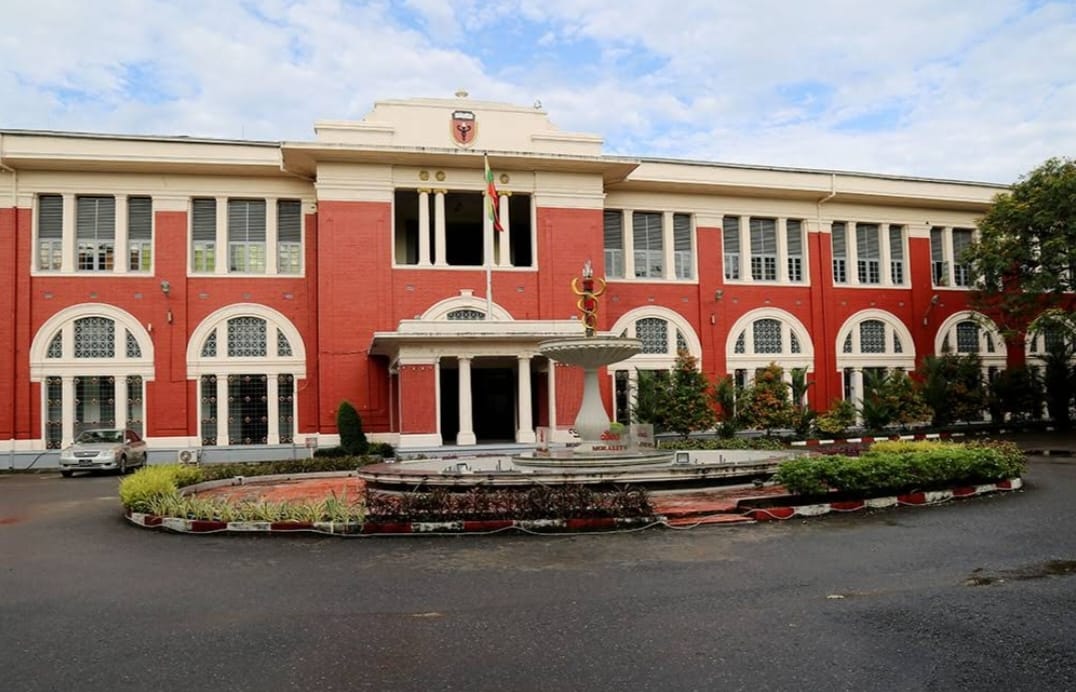
- Lanmadaw Campus (St. John's): The main campus, which was built in 1927, is 2 acres big. It has the administrative offices and the para-clinical departments, which are Microbiology, Pathology, and Pharmacology.
- The Medical Skill, Simulation and Research Center (MSSRC) opened in late 2019 in Lanmadaw. It has state-of-the-art simulation labs for clinical training.
- The Pyay Road Campus (Leikkhon) is a 3-acre site that has pre-clinical departments. The famous wooden Assembly Hall, which is nicknamed "Leikkhon" (Tortoise Back) because of its unique shell-like teak construction, is located there.
- The Multimedia Teaching Auditorium is a new building on the Lanmadaw campus that is used for international seminars and big academic presentations.
- Specialized Laboratories: These are labs that are only for Botany, Zoology, Chemistry, Physics, Physiology, and Biochemistry.
- Central Libraries: Two big libraries, Lanmadaw and Pyay, have a lot of physical books and access to international digital medical databases.
- The Common Research Laboratory is a central location that makes it easier for graduate students (Master's, PhD, and Doctoral levels) to do research in all medical fields.
- The Anatomy Dissection Hall is a big, specialized building on the Pyay campus where people study human gross anatomy.
- Medical Resource Center (MRC): A special place for students to find medical models, visual aids, and e-learning modules.
- Student Recreation Rooms: These are spaces on the Pyay and Thaton campuses where students can relax and plan extracurricular activities.
Hospital & Medical Facilities
Leading tertiary care hospital attached to the institution
UM1 is primarily affiliated with the largest and most advanced public hospitals in Myanmar for clinical clerkships.
- Yangon General Hospital (YGH): A 2,000-bed Victorian-style landmark and the primary tertiary teaching hospital. It features 28 specialist departments and the National Blood Bank.
- New Yangon General Hospital: An additional teaching site used for specialized surgical and medical training.
- Central Women’s Hospital: One of the oldest maternal health centers in Asia, used for Obstetrics and Gynaecology rotations.
- Yangon Children’s Hospital (YCH): A 500-bed facility providing comprehensive paediatric training.
- Specialty Centers: Rotations also take place at the Yangon Orthopaedic Hospital, Yangon Eye Hospital, and the Otorhinolaryngology Hospital.
Fee Structure
State University Affordability
For people from Myanmar, the government pays a lot of the costs because it is a public institution.
Funding
- Merit Scholarships: For students who do very well in the first and second M.B., B.S. tests (up to $1,200 per year for local students who qualify).
- Stipends: The Ministry of Education gives students from low-income families who meet academic requirements a monthly stipend.
- International Alliances: You can get occasional grants by working with organizations like the Royal College of Paediatrics and Child Health (UK).
City Details
- The Vibe: Yangon is a city of contrasts, with colonial buildings next to modern ones. The campuses are in the middle of the city, close to important places like the Shwedagon Pagoda.
- Connection:
- Air: The main airport is Yangon International Airport (RGN), which is about 30–40 minutes from the campuses.
- Transport: Buses and the Yangon Circular Railway make it easy to get around the city. The campuses are in busy, easy-to-reach areas.
Hostel & Mess
- Accommodation: Tagaung Hall and Prome Hall (for men) and Inya Hall (for women) are historic hostels. Even though they are traditional, they help medical students feel like they are part of a "brotherhood/sisterhood" and that they are older than everyone else.
- Student Unions: Active groups put together the yearly "Medical Magazine," sports events, and cultural festivals.
- Eating: The university's canteens serve cheap Burmese food like mohinga, rice, and curry. There are also a lot of street food options in the Pyay Road area that students like.
- Social Responsibility: Students are known for putting together blood drives and health education projects in rural areas as part of the Preventive and Social Medicine curriculum.
Miscellaneous
- Curriculum Evolution: Recently switched to an Integrated Curriculum to meet WFME standards around the world.
- House Officer Training: Before getting their final degree, students must do a paid internship for a year in a hospital that is affiliated with the program.
Collage Images Gallery


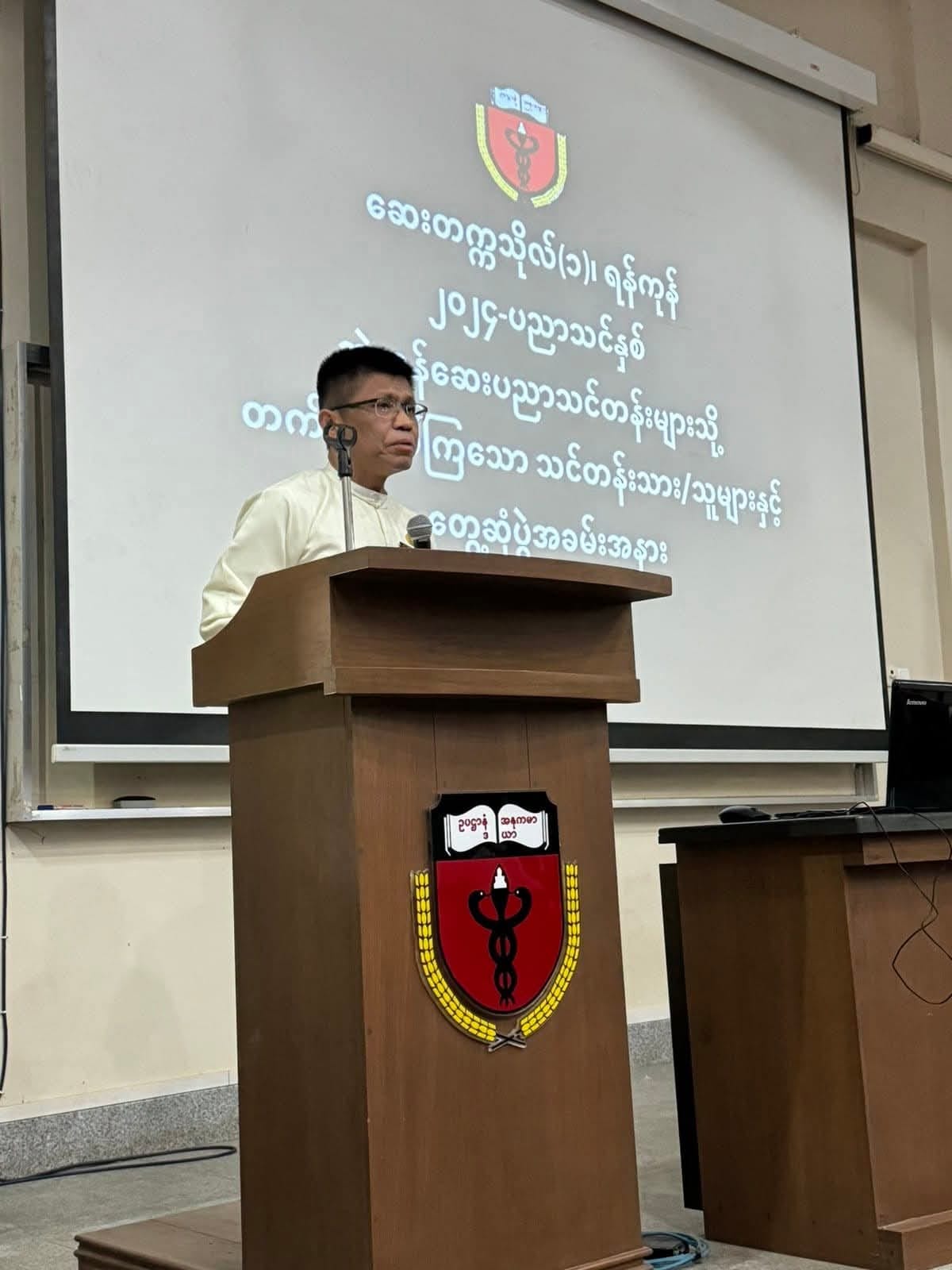
Facilities & Campus Life

Well-equipped Library

Experienced Faculty

Computer Lab

Sports Activities

Heritage Campus


Frequently Asked Questions
Why Consult With Us?
- 15+ years of experience in medical education counseling
- 5000+ students successfully guided
- 50+ partner universities worldwide
- Free initial consultation with no obligation