

University of Medicine 2

General Information
The University of Medicine 2 in Yangon, which is run by the Ministry of Health, is a top public medical school. It was founded in 1963 as Medical College 2 in Mingaladon. In 1996, it moved to its current, larger campus in North Okkalapa. The outcome-based integrated curriculum that UM2 started using in 2019 is what sets it apart. It focuses on competency, medical ethics, and early clinical exposure. It is still one of the most competitive schools in Myanmar, only accepting the top 0.02% of students who take the matriculation exam.
General Information
- The main location is North Okkalapa Township in Yangon, Myanmar.
- Degree Given: M.B., B.S. 7-year program (including an internship) that is the same as an MD/MBBS.
- The language of instruction is English.
- Accreditation: The Myanmar Medical Council and the Educational Commission for Foreign Medical Graduates (ECFMG) both recognize it.
- Acceptance:
- Selection: Very competitive, with only about 300 students accepted each year based on their University Entrance Examination scores.
- Structure: 1 year of foundation, 5 years of medical school, and 1 year of house officer (internship) training.
- The curriculum changed to an Outcome-Based Integrated Curriculum in 2019. It is now divided into system-based modules, such as Cardiovascular, Respiratory, and so on.
Campus Facilities
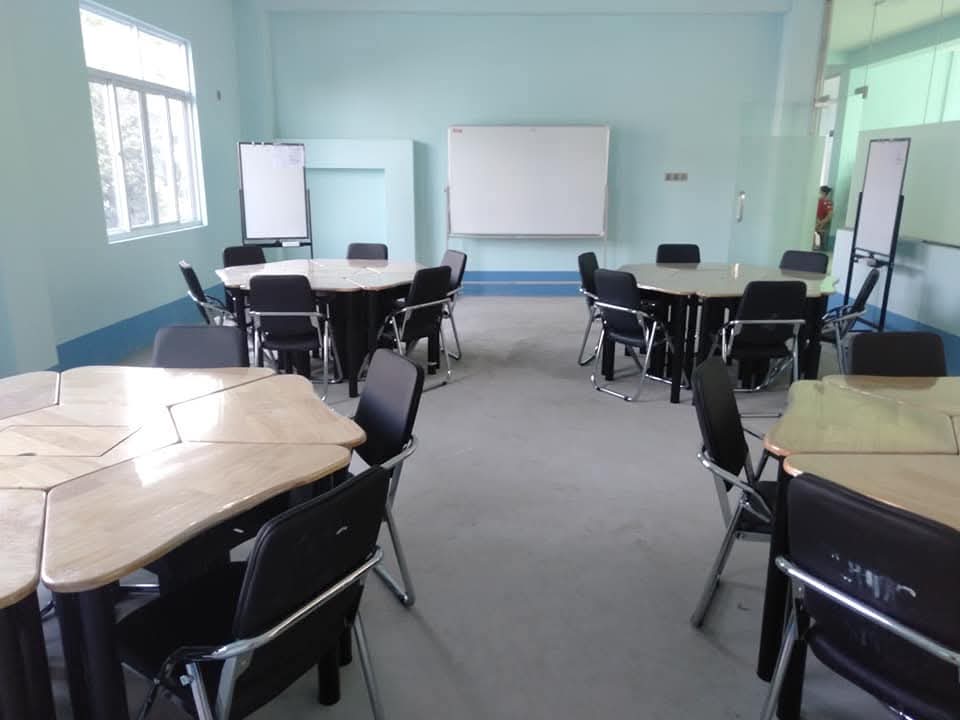
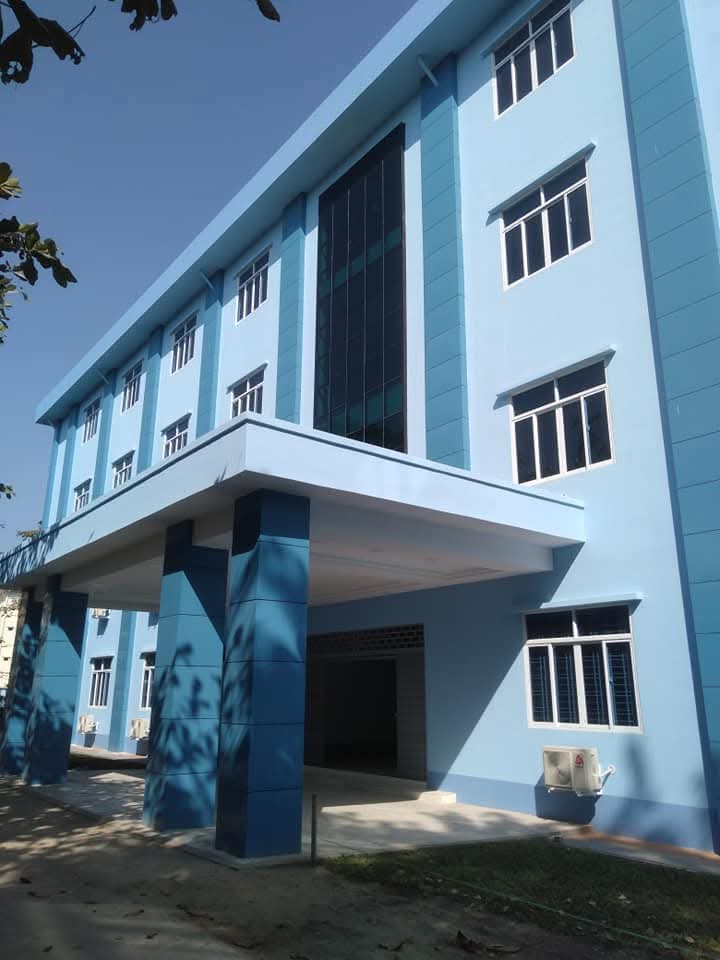
The North Okkalapa campus is a medical school with modern facilities for both undergraduate and graduate students.
- The Common Research Laboratory (CRL) opened in 2000 and has advanced equipment for Immunohistochemistry, HPLC, and Atomic Absorption Spectrophotometry to help PhD and Doctoral students with their research.
- Medical Skill Training Lab: a place with high-fidelity simulators that is set up for the OSCE (Objective Structured Clinical Examination) and OSPE (Objective Structured Practical Examination).
- Leikkhon Hall (Recreation Center): A place where students can relax and have fun by going to events, concerts, and social gatherings.
- Central Library: Offers a huge selection of academic materials, such as e-books, e-journals, and primary digital archives that can be accessed through a Wide Area Network.
- The sports complex has a fitness center, a futsal playground, a basketball court, and a football field just for inter-medical tournaments.
- ICT & Computer Lab: A new space for teaching health informatics and giving people access to CMINET (Medical Information Network).
- The Anatomy Dissection Hall is a key part of the pre-clinical years and supports hands-on modules on the nervous and musculoskeletal systems.
- Food Court & Café: The UM2 Food Court and Daily Dose Café are both part of this area. They offer a variety of meals and places for students and staff to hang out.
- Student Health Clinic: A place on campus where students can get treatment for minor illnesses and be sent to university teaching hospitals.
- Mini Gardens: Quiet study and outdoor relaxation areas with plants all over campus.
Hospital & Medical Facilities
Leading tertiary care hospital attached to the institution
UM2 is connected to a number of large tertiary care centers, which means that students will see a lot of different clinical cases.
- North Okkalapa General Hospital (NOGH) is the main teaching hospital (affiliated since 1970) that offers a full range of medical, surgical, and emergency services.
- Insein General Hospital has been a partner since 1973 and is used for a variety of clinical placements.
- Thingangyun Sanpya General Hospital is a major teaching hospital that has been affiliated with the school since 1996. It provides secondary and tertiary care.
- Yankin Children Hospital is a specialized place for training in pediatric clerkships and neonatal care.
- The main place for Obstetrics and Gynecology rotations is South Okkalapa Maternal and Child Hospital.
- 500-bed Specialty Hospital in Yangon is a tertiary care center that specializes in Hepatology, Rheumatology, and Urology and is connected to both UM1 and UM2.
- Ywarthargyi Psychiatric Hospital: The main place for clerkships in mental health and psychiatry.
Fee Structure
State University Affordability
Education at UM2 is state-funded and heavily subsidized for Myanmar citizens. International fees are subject to specific government regulations.
City Details
- The Vibe: North Okkalapa is a bustling residential and commercial township located about 12 miles from downtown Yangon, offering a more suburban academic environment.
- Connectivity:
- Air: Located within reasonable distance of Yangon International Airport (RGN).
- Transport: Well-served by city bus lines and taxis; however, traffic can be heavy during peak hours.
Hostel & Mess
- Housing: The university runs several halls, such as Ukkala Hall (for men), Thida Hall (for women), and Mya Thila Hall (for women), all of which are safe and social.
- The Student Union is a group of students who work to protect students' rights and plan important cultural and political events on campus.
- Clubs and Societies: Students do a lot of different things, like dance in traditional groups, practice yoga and judo, and fight for the environment.
- Health and Wellness: The school really cares about mental health. There is even a community center where people can get to know each other and build community.
Miscellaneous
- The M.B., B.S. for House Officer Year The degree is only officially given after the one-year internship (House Officer training) is finished satisfactorily.
- Residential Field Training (RFT): Fourth-year students go on a four-week trip to rural areas as part of the Community Medicine module.
Collage Images Gallery
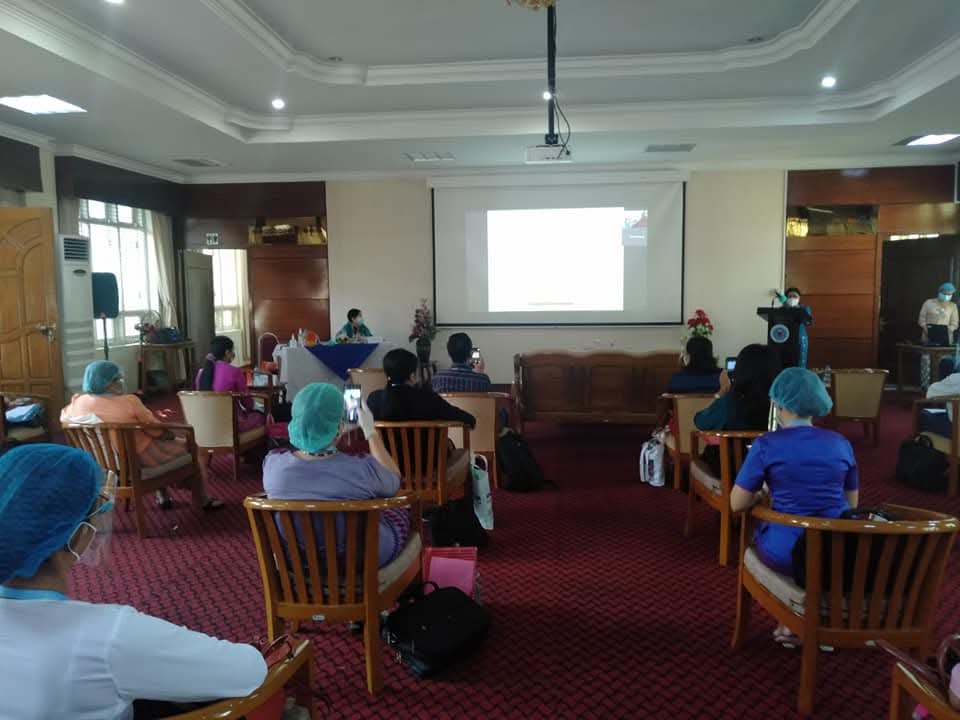
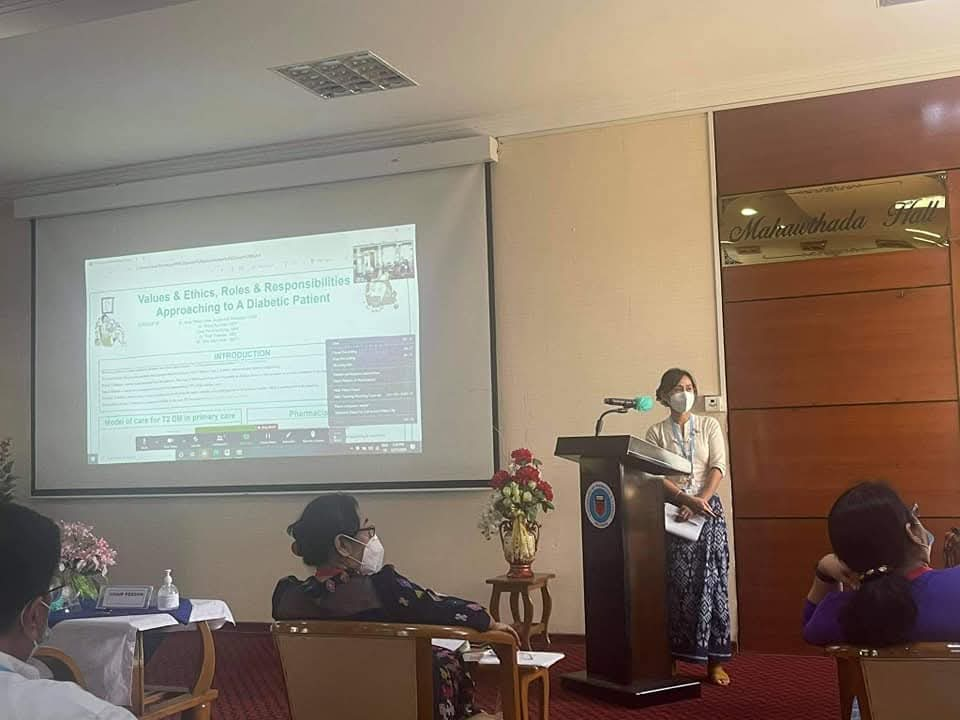
Facilities & Campus Life

Well-equipped Library

Experienced Faculty

Computer Lab

Sports Activities

Heritage Campus


Frequently Asked Questions
Why Consult With Us?
- 15+ years of experience in medical education counseling
- 5000+ students successfully guided
- 50+ partner universities worldwide
- Free initial consultation with no obligation