
1. What makes Messina Medical School distinctive?
+Its very low, income-banded tuition fees and a medical faculty built directly around one large teaching hospital, the Policlinico 'G. Martino', on a single shared campus.
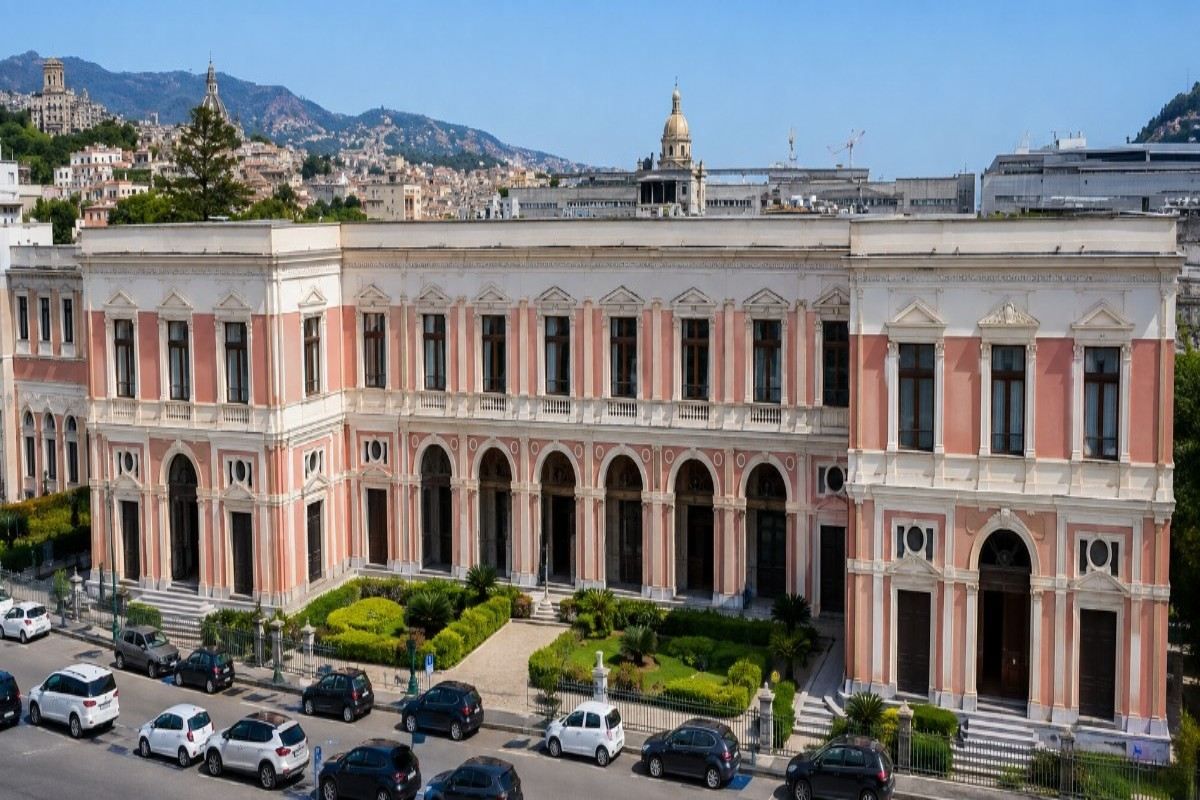
 Italy | Est. 1596
Italy | Italian Ministry of University and Research (MUR); listed in the World Directory of Medical Schools (WDOMS) | English (international track), Italian (domestic track) medium
Expert will call you within 2 hours
The University of Messina traces its roots back to 1548, when Ignatius of Loyola sent Jesuit teachers to open a college in the city at the request of local citizens, making it one of the earliest Jesuit schools anywhere and one of the oldest universities in Italy. Disputes between the Jesuits and local authorities over control of higher education delayed matters, and it was not until 1596 that the Athenaeum truly began functioning as a full university with several faculties, medicine among them.
Teaching in Messina was interrupted more than once over the following centuries, including after an anti-Spanish uprising in the late seventeenth century. The most severe blow came in 1908, when a catastrophic earthquake and tsunami flattened most of the city, killed tens of thousands of residents, and destroyed a large share of the university's buildings and scientific equipment, along with several members of the teaching staff. The university reopened gradually between 1909 and 1915, and medicine grew back into one of its strongest and most established faculties over the following decades.
Medical teaching today is centred on the Policlinico Universitario 'G. Martino', a large university hospital on the southern edge of the city that brings lecture halls, laboratories, libraries and clinical departments together on one campus. Because the hospital and the medical school share the same grounds, students move between classroom teaching and ward-based learning without long commutes, a practical advantage once clinical placements intensify in later years.
The Corso di Laurea Magistrale a Ciclo Unico in Medicine and Surgery is a six-year, single-cycle degree worth 360 ECTS credits, taught entirely in English for international students alongside a parallel Italian-medium course for domestic students. Early years cover the basic medical sciences, including anatomy, physiology, biochemistry, histology and general pathology, before the curriculum shifts toward systems-based and clinical teaching, with hospital placements building progressively through later years at the Policlinico and other affiliated hospitals across the province.
Entry to the English-taught course is through the IMAT, the International Medical Admissions Test used by Italian public universities offering English-medium medicine programmes. The exam is sat in a single sitting each September and covers logical reasoning, general knowledge, biology, chemistry, physics and mathematics, all presented in English. Messina does not run a separate interview for non-EU candidates; the IMAT ranking alone decides who is offered a place, which keeps admissions comparatively transparent next to systems built around subjective interviews.
Tuition fees for Medicine and Surgery are unusually low by international standards. Italian public universities set fees on an income-based sliding scale, known as ISEE for residents and a comparable equivalent for international families, and Messina applies a broadly similar, modestly banded fee to non-EU applicants too, generally landing between roughly €1,500 and €3,000 per year depending on family income bracket, with a small fixed regional tax on top. That keeps six years of tuition dramatically cheaper than equivalent programmes in the UK, Ireland, or private Caribbean medical schools.
Messina itself is one of the more affordable Italian cities for students to live in. Monthly living costs, covering food, local transport and everyday incidentals, typically run around €550 to €650, and student accommodation is available from roughly €180 to €350 per month depending on whether a student chooses a university residence hall, a rented room, or a shared flat. Sicily's overall cost of living sits comfortably below that of Milan, Rome, or Bologna, and that gap compounds meaningfully across a full six-year programme.
The city sits on the Strait of Messina, facing the Calabrian coast across a narrow stretch of water that has connected Sicily to the mainland since antiquity. It functions as a regional hub for eastern Sicily, with a working port and a historic centre rebuilt after the 1908 earthquake. It is smaller and quieter than Italy's larger university cities, which many students find easier to settle into, though it also means fewer big-city amenities and a smaller international student community than in Rome, Milan or Bologna.
Indian students weighing Messina against other options need to plan for the return journey to India as carefully as they plan the degree itself. NEET remains a requirement for eventual registration with the National Medical Commission, even though it plays no role in Messina's own admissions process, which is based purely on the IMAT. Graduates who want to practise in India afterward must also clear the NExT licensing exam, which has replaced the older FMGE screening test for foreign graduates, so that step needs budgeting for well before the six years in Italy are even finished.
Because the programme is delivered in English but based in an Italian-speaking country, students who intend to complete clinical rotations comfortably, or who hope to work in Italy after graduating, usually pick up conversational Italian during the early years, even though it is not a formal requirement for entry. Local hospital staff, patients and most day-to-day administrative processes are predominantly Italian-speaking outside structured English-medium teaching, so a working knowledge of Italian becomes genuinely useful, and by the clinical years, close to essential.
Recognition-wise, the university and its medical degree are listed in the World Directory of Medical Schools, and the course is accredited by the Italian Ministry of University and Research, giving graduates a degree that is automatically valid across the European Union under EU mutual recognition rules and independently verifiable through WDOMS. This is the same recognition pathway used by other Italian medical schools offering English-taught, IMAT-based programmes, and it is what allows Indian regulatory bodies to treat the degree as coming from a legitimate, internationally listed medical school.
In summary, the University of Messina offers a long-established, hospital-integrated medical education at a fraction of the cost of most English-language alternatives, with admission decided by a single standardised test rather than a lengthy, multi-stage process. The trade-offs are a smaller, largely Italian-speaking city with a modest international student scene, and the extra step of NExT after graduation for any student planning to return home and practise medicine in India.
No hidden charges, no donation. The full picture of costs at MBBS in University of Messina.
Tuition Fee
EUR 1,500-3,000 (INR ~1,67,547- 3,35,094)
EUR 1,500-3,000 (INR ~1.40 lakh-2.80 lakh)
Hostel Fee
EUR 180-350 (INR ~20,105-39,094) per month
EUR 180-350 (INR ~20,105-39,094) per month
Food & Meals
EUR 550-650 (INR~61,433-72,603)
per month
Insurance
EUR 700 (INR ~Rs. 0.65 lakh)
per year
Donation
No donation fee
No hidden fee
Total Estimated Cost
EUR 55,000-70,000 (INR ~61.4 lakh-78.2 lakh))
6 year
25–35%
Average FMGE first-attempt pass rates for students from many overseas medical universities. Students from structured programs consistently score higher.
Students returning to India need to clear the FMGE/NExT exam. MBBS in University of Messina integrates exam-oriented coaching into the regular curriculum so students are prepared from day one.
A structured program that takes you from foundational sciences to clinical mastery.
Early laboratory sessions and small-group tutorials designed to introduce problem-based learning methods used throughout the rest of the course.
Foundational coursework in biophysics, medical statistics and general chemistry, building the scientific base required for later systems-based and clinical teaching
Deeper understanding of human body systems and disease mechanisms.
Foundation of medical knowledge with lab sessions and introductory clinical exposure.
Continued integration of laboratory science with early bedside teaching sessions at the Policlinico.
Introduction to diagnostic methods and semeiotics, the discipline of clinical examination technique, preparing students for supervised patient contact
Continued case-based and laboratory learning integrated with structured hospital rotations across core. Development of clinical reasoning skills through supervised history-taking and examination of real patients departments.
Internal medicine, general surgery and related surgical specialties, with increasing ward-based teaching at the Policlinico Universitario 'G. Martino'
Growing clinical responsibility under close supervision, alongside continued theoretical coursework and case discussions. Preparation for the practical skills expected during the final-year internship period
Rotations across further specialties including paediatrics, obstetrics and gynaecology, psychiatry, neurology and public health/hygiene
Final examinations and preparation of the Laurea thesis, a supervised research or clinical project required for graduation. Completion of the Esame di Stato (state licensing examination) required to practise medicine in Italy, sat shortly after graduation.
Extended clinical internship (tirocinio pratico valutativo) across major hospital departments, preparing students for supervised independent practice
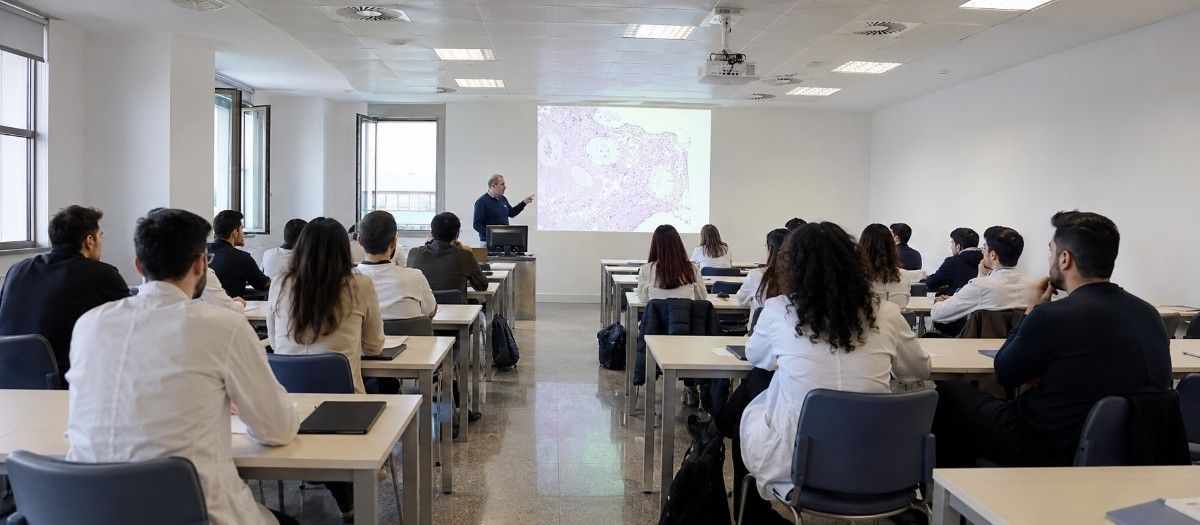
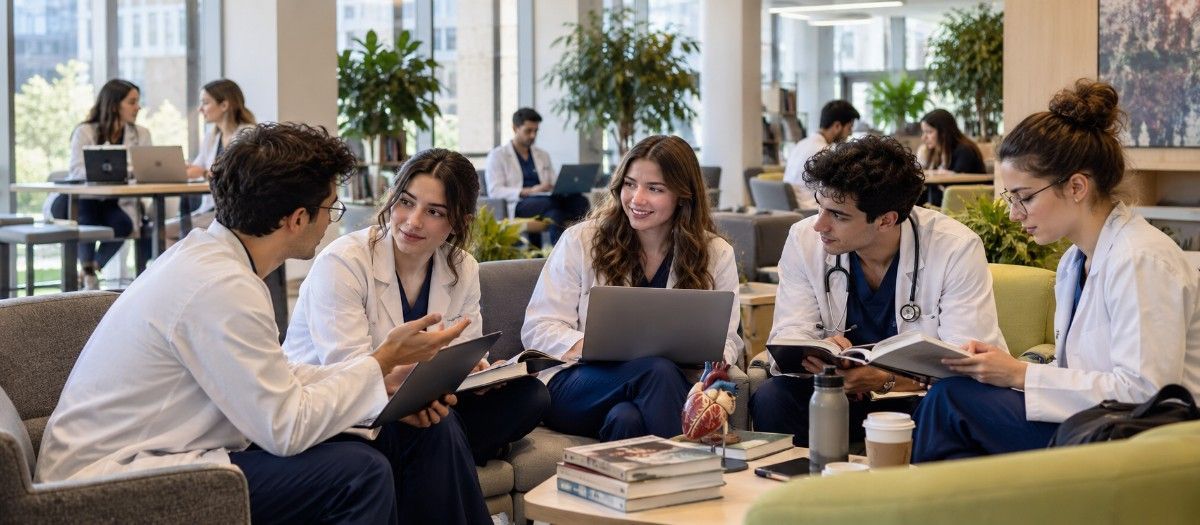
Furnished hostel rooms with Wi-Fi, laundry, 24/7 security, and Indian mess on or near campus.
Indian restaurants and mess facilities serving vegetarian and non-vegetarian home-style food daily.
Strong Indian community with cultural events, festival celebrations, and peer support groups.
Students get hands-on clinical training in government and private hospitals affiliated with the university.
Practical information for students planning to study at MBBS in University of Messina.
Prepare for all seasons. Thermal wear for winters, light clothing for summers. University provides heating in hostels.
Student visa processed with university invitation letter. Direct and connecting flights from major Indian cities.
Health insurance included in fees. Medical facility on campus plus city hospitals easily accessible.
Local SIM cards available. WhatsApp and video calls keep you connected with family back home.
Average monthly expenses of $150–$250 covering food, transport, and personal needs.
University library, online databases, and study groups. Seniors mentor juniors through academic challenges.
Our team guides you through every step — from application to arriving on campus.
Our Italy specialist explains the IMAT process, the income-based fee system, Bologna vs Rome vs other universities, and a total cost comparison with Hungary and Poland.
Our team registers you for IMAT (September test) and begins structured coaching. Biology, Chemistry, Physics, Maths, Critical Thinking. Begin preparation at least 6 months before the test.
Full Italian visa and IMAT application document set academic certificates, income documentation if applicable.
IMAT taken at designated test centres. We provide post-test analysis and guidance on university rankings.
Following IMAT ranking, the Italian university issues an admission confirmation. Our team can help with this process.
Full documentation submitted to the Italian Embassy or Consulate. Begin immediately after receiving the admission letter.
Our team advises qualifying families on the income-based fee reduction process.
Bologna /Rome orientation, accommodation, portico culture, Italian transport, Trenitalia app, banking, SIM card.
Our local team in Bologna (BLQ) or Rome (FCO) meets you and manages the first-week settlement.
We manage the Permesso application at the local Post Office within 8 days of arrival with our support, which is renewed annually.
Admission Helpline — Contact our counsellors for step-by-step assistance.
“The faculty here is incredibly supportive. The clinical training during hospital rotations has given me real confidence in patient care.”
“Affordable fees without compromising on quality. The campus facilities and hostel life made my transition abroad very smooth.”
“English medium instruction and WHO-recognized curriculum were the deciding factors for me. No regrets so far — excellent experience overall.”
“The university helped with everything from visa to accommodation. Hospital exposure from year three has been invaluable for my FMGE prep.”
“Just cleared my licensing exam on the first attempt. The structured coaching and mock exams during final year were a game-changer.”
“Safe campus, good food options, and a strong Indian student community. The teaching methodology is very practical and hands-on.”
Its very low, income-banded tuition fees and a medical faculty built directly around one large teaching hospital, the Policlinico 'G. Martino', on a single shared campus.
Yes, the international track is taught entirely in English, and no separate IELTS or TOEFL certificate is formally required for admission.
Yes. All non-EU applicants must sit the IMAT, and seats are allocated purely by IMAT ranking, with no separate interview stage.
Yes, provided they meet the PCB subject requirements and register for the IMAT; NEET is not used in Messina's own admission process but is required later for NMC registration.
Yes, for future NMC registration in India, although Messina's own admissions process is based solely on the IMAT score, not NEET marks.
FMGE has been replaced by NExT; graduates returning to India must clear NExT and meet NMC Foreign Medical Graduate requirements before registering.
Tuition alone typically comes to about EUR 9,000-18,000 over six years, before accommodation and living costs, well below most Western alternatives.
Yes, graduates must pass Italy's Esame di Stato to practise in Italy, and separately NExT if they plan to practise in India.
Clinical contact builds gradually from Year 3 onward, with full hospital-based rotations from Year 4 through Year 6 at the Policlinico 'G. Martino'.
It is not a formal entry requirement, but most students pick up conversational Italian since hospital wards and daily life outside class are Italian-speaking.

Our expert counsellors will guide you through the complete admission process — from documents to airport pickup.