
1. Is Parthenope's Medicine and Surgery programme new?
+Yes, it was activated for the 2025/2026 academic year, making it one of the newest medical degree programmes in Italy.
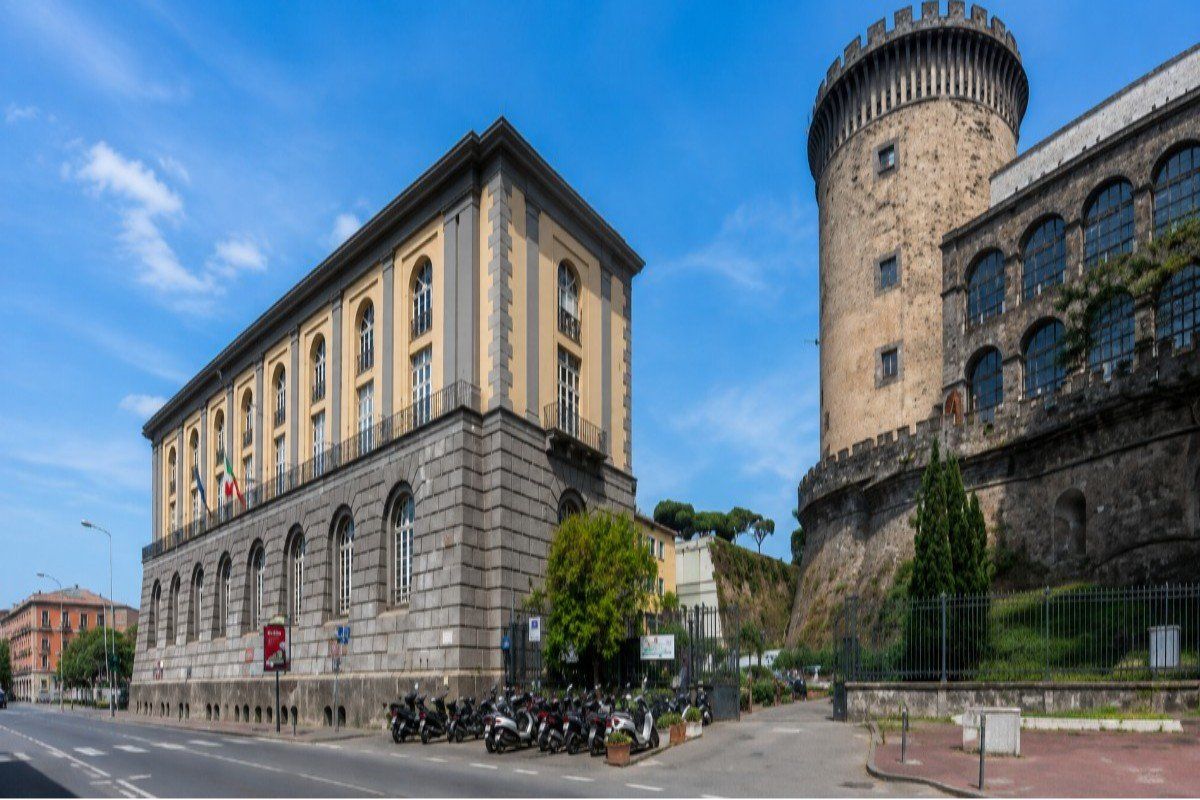
 Italy | Est. 1999
Italy | Italian Ministry of University and Research (MUR), subject to final ministerial and ANVUR approval processes typical of a newly activated programme | Italian only (no English-taught Medicine and Surgery track currently offered) medium
Expert will call you within 2 hours
The University of Naples Parthenope has a very different history from the ancient institution of Federico II across the city. It began life in 1919 as the Regio Istituto Superiore Navale, a specialised higher education institute set up on the initiative of Vice-Admiral Leonardi Cattolica to train professionals for Italy's growing merchant navy and maritime economy. Formalised by royal decree in 1920 and later renamed the Istituto Universitario Navale, it carried that maritime identity for roughly seventy years before broadening into a full multi-faculty university.
In 1999, the institution reorganised itself into the university now known as Parthenope, expanding well beyond its naval and economics roots to add faculties in Law, Engineering and Sport Sciences. That expansion has continued in the years since, and the university has steadily built a reputation across a wider range of disciplines than its founding purpose would suggest.
Medicine is the newest addition to that expansion. Parthenope's Corso di Laurea Magistrale a Ciclo Unico in Medicina e Chirurgia, a six-year single-cycle degree carrying 360 ECTS credits, was activated for the 2025/2026 academic year, backed by a substantial regional investment of around €30 million from Campania toward building out the programme's teaching and clinical infrastructure. This makes it one of the youngest medical degree programmes in Italy, with none of the decades or centuries of institutional history that some other schools on this list can point to.
Because the programme is so new, it does not have its own dedicated university hospital in the way that older Italian medical schools typically do. Instead, clinical training is being built around partnerships with a cluster of hospitals across Naples, including Ospedale Monaldi, the CTO orthopaedic and trauma centre, Ospedale Cotugno, and Ospedale del Mare, giving students exposure across several specialised sites rather than one single teaching hospital campus.
The course is taught in Italian, in line with Italy's national reform of medical admissions that came into effect from the 2025/2026 academic year. Under this system, known as the Semestre Filtro or Semestre Aperto, applicants register freely for an open first semester of lectures and then sit standardised national exams in Biology, Chemistry and Physics; a national merit ranking based on those results decides who is confirmed into a place, replacing the older single entrance-exam model used in previous years for Italian-medium medicine courses.
Because Parthenope's medicine programme has only just launched, prospective applicants should treat published details on seat numbers, fee bands and even some administrative processes as provisional and subject to change from one intake to the next, at least until the programme completes its first full graduating cycle and settles into a more established routine. Checking the university's own official pages each admissions cycle is particularly important here, more so than for a long-established faculty.
Fees are expected to follow the same broad, income-banded structure used by other Italian public universities, typically starting from a few hundred euros at the lowest income bands and rising toward roughly €3,000 to €4,000 per year at the top bands, alongside a small fixed regional tax, though the university's specific fee schedule for the medicine programme should be confirmed directly given how recently the course was approved.
Naples itself is one of Italy's most historic and culturally rich cities, sitting on the Bay of Naples with Mount Vesuvius visible across the water, and is considerably cheaper to live in than Milan or Rome. Monthly living costs, including rent, food and transport, typically run somewhere between €600 and €900, with shared-room accommodation available from around €200 to €450 per month depending on location.
Indian students considering Parthenope need to weigh both the Italian-language requirement and the newness of the programme against its advantages. NEET remains necessary for eventual registration with India's National Medical Commission, and graduates hoping to return to India must clear NExT, the exam that has replaced the older FMGE screening test, regardless of how established or new their Italian medical school is.
Because the entire course, from the filter-semester exams through to hospital ward rounds, is conducted in Italian, this programme realistically requires a genuinely functional command of the Italian language from the outset, generally expected to be at least B2 level, since Parthenope currently offers no English-medium alternative for Medicine and Surgery.
In summary, Parthenope offers a brand-new medicine programme inside a university with a distinctive maritime and multi-disciplinary history, backed by significant regional investment and a growing cluster of hospital partnerships across Naples. The trade-offs are the lack of institutional track record specific to medicine, an entirely Italian-language admissions and teaching process, and the general uncertainty that comes with being one of the newest medical faculties in the country.
No hidden charges, no donation. The full picture of costs at MBBS in University of Naples Parthenope.
Tuition Fee
EUR 200-4,000 per year
EUR 200-4,000 per year
Hostel Fee
~ EUR 200-450 per month
~ EUR 200-450 per month
Food & Meals
EUR 600-900
per month
Insurance
EUR 700
per year
Donation
No donation fee
No hidden fee
Total Estimated Cost
~ EUR 55,000-85,000
6 year
25–35%
Average FMGE first-attempt pass rates for students from many overseas medical universities. Students from structured programs consistently score higher.
Students returning to India need to clear the FMGE/NExT exam. MBBS in University of Naples Parthenope integrates exam-oriented coaching into the regular curriculum so students are prepared from day one.
A structured program that takes you from foundational sciences to clinical mastery.
Foundational coursework in biophysics, medical statistics and general and organic chemistry introduction to problem-based learning methods intended to be used throughout the remaining years of the course
Human anatomy, histology, embryology, biochemistry, physiology and medical biology, taught entirely in Italian alongside early professionalism training
Training in semeiotics and clinical examination technique ahead of more intensive clinical years Continued integration of laboratory science with structured teaching in Italian-language clinical settings
General and systemic pathology, microbiology, immunology and pharmacology, alongside preparatory training ahead of hospital placements
Case-based and laboratory learning combined with structured hospital rotations across core departments Development of clinical reasoning through supervised history-taking and physical examination of patients
Internal medicine, general surgery and related surgical specialties, with clinical placements across partner hospitals including Monaldi and Ospedale del Mare
Growing clinical responsibility under supervision, alongside continued case discussions and theoretical coursework Preparation for the final-year internship and practical skills assessments
Rotations through further specialties including paediatrics, obstetrics and gynaecology, psychiatry, neurology and public health across the partner hospital network
Final examinations and completion of the Laurea thesis, a supervised research or clinical project Completion of Italy's Esame di Stato (state licensing examination) required to practise medicine after graduation
Extended clinical internship (tirocinio pratico valutativo) across Parthenope's partner hospitals, including CTO and Cotugno
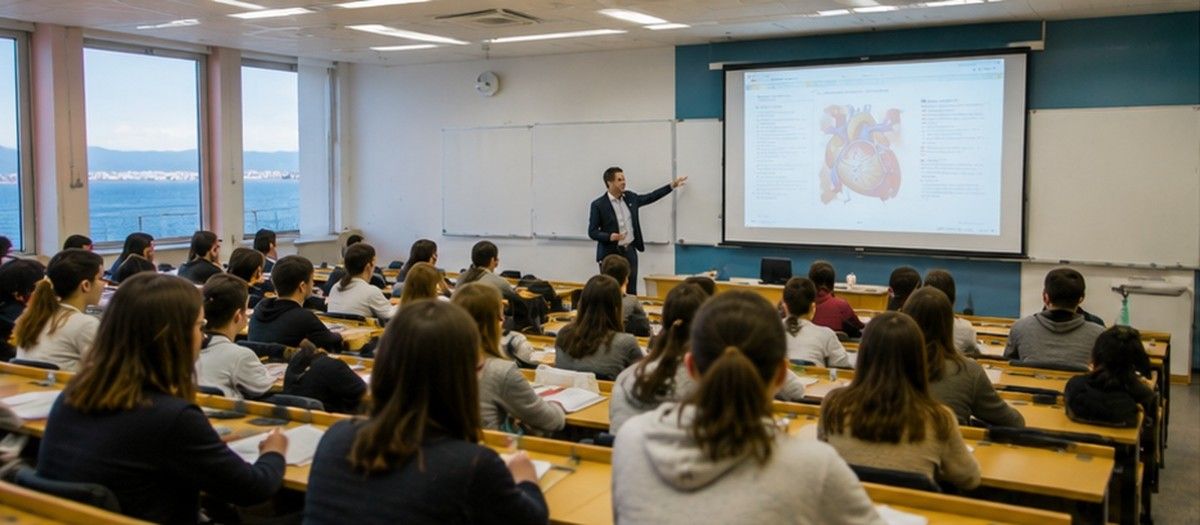
Furnished hostel rooms with Wi-Fi, laundry, 24/7 security, and Indian mess on or near campus.
Indian restaurants and mess facilities serving vegetarian and non-vegetarian home-style food daily.
Strong Indian community with cultural events, festival celebrations, and peer support groups.
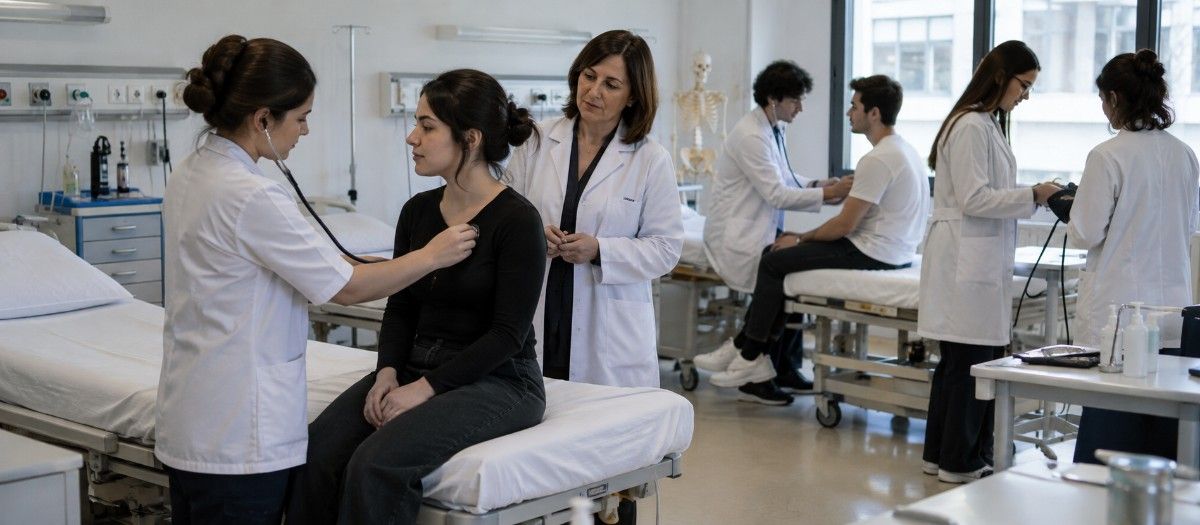
Students get hands-on clinical training in government and private hospitals affiliated with the university.
Practical information for students planning to study at MBBS in University of Naples Parthenope.
Prepare for all seasons. Thermal wear for winters, light clothing for summers. University provides heating in hostels.
Student visa processed with university invitation letter. Direct and connecting flights from major Indian cities.
Health insurance included in fees. Medical facility on campus plus city hospitals easily accessible.
Local SIM cards available. WhatsApp and video calls keep you connected with family back home.
Average monthly expenses of $150–$250 covering food, transport, and personal needs.
University library, online databases, and study groups. Seniors mentor juniors through academic challenges.
Our team guides you through every step — from application to arriving on campus.
Our Italy specialist explains the IMAT process, the income-based fee system, Bologna vs Rome vs other universities, and a total cost comparison with Hungary and Poland.
Our team registers you for IMAT (September test) and begins structured coaching. Biology, Chemistry, Physics, Maths, Critical Thinking. Begin preparation at least 6 months before the test.
Full Italian visa and IMAT application document set academic certificates, income documentation if applicable.
IMAT taken at designated test centres. We provide post-test analysis and guidance on university rankings.
Following IMAT ranking, the Italian university issues an admission confirmation. Our team can help with this process.
Full documentation submitted to the Italian Embassy or Consulate. Begin immediately after receiving the admission letter.
Our team advises qualifying families on the income-based fee reduction process.
Bologna /Rome orientation, accommodation, portico culture, Italian transport, Trenitalia app, banking, SIM card.
Our local team in Bologna (BLQ) or Rome (FCO) meets you and manages the first-week settlement.
We manage the Permesso application at the local Post Office within 8 days of arrival with our support, which is renewed annually.
Admission Helpline — Contact our counsellors for step-by-step assistance.
“The faculty here is incredibly supportive. The clinical training during hospital rotations has given me real confidence in patient care.”
“Affordable fees without compromising on quality. The campus facilities and hostel life made my transition abroad very smooth.”
“English medium instruction and WHO-recognized curriculum were the deciding factors for me. No regrets so far — excellent experience overall.”
“The university helped with everything from visa to accommodation. Hospital exposure from year three has been invaluable for my FMGE prep.”
“Just cleared my licensing exam on the first attempt. The structured coaching and mock exams during final year were a game-changer.”
“Safe campus, good food options, and a strong Indian student community. The teaching methodology is very practical and hands-on.”
Yes, it was activated for the 2025/2026 academic year, making it one of the newest medical degree programmes in Italy.
No, it is taught entirely in Italian, and Parthenope does not currently offer an English-medium alternative for Medicine and Surgery.
The Semestre Filtro: free first-semester enrolment followed by national ranking based on exams in Biology, Chemistry and Physics, all in Italian.
Very good. A functional command of Italian, generally at least B2 level, is needed from day one, since the entire course is delivered in Italian.
Yes, for future NMC registration in India, although Parthenope's own admissions process is based on the Semestre Filtro national ranking, not NEET.
FMGE has been replaced by NExT; graduates returning to India must clear NExT and meet NMC Foreign Medical Graduate requirements.
Not a single dedicated one; clinical training is delivered through a partnership network including Monaldi, CTO, Cotugno and Ospedale del Mare in Naples.
Yes, graduates must pass Italy's Esame di Stato to practise in Italy, and separately NExT if planning to practise in India.
No. Because the programme only launched in 2025/2026, it has no graduating classes yet, so seat numbers and procedures should be checked freshly each year.
Yes, Naples is considerably cheaper than Milan or Rome, with living costs typically 30 to 50 percent lower than in northern Italian cities.

Our expert counsellors will guide you through the complete admission process — from documents to airport pickup.