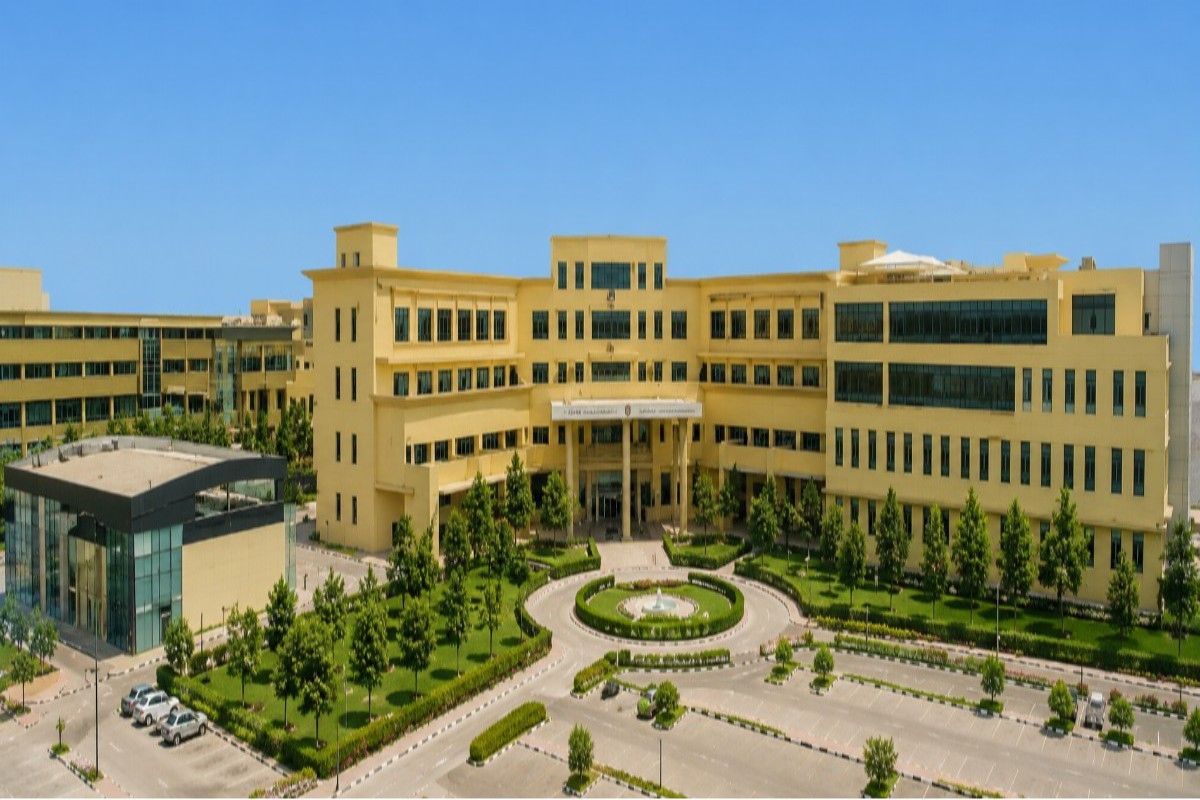
The University of Sharjah (UOS) is one of the Middle East's leading universities for medical education, biomedical research, and healthcare innovation. Located in the Emirate of Sharjah, United Arab Emirates, the university is internationally recognised for its modern curriculum, advanced teaching facilities, interdisciplinary healthcare education, and commitment to producing highly skilled physicians capable of addressing contemporary healthcare challenges. The College of Medicine has earned a strong reputation for combining academic excellence with clinical competence, research, and community service.
Established in 1997 under the vision of His Highness Sheikh Dr. Sultan bin Muhammad Al Qasimi, the University of Sharjah was created to become a world-class centre for higher education and scientific research. Since its founding, the university has experienced rapid growth, becoming one of the UAE's largest comprehensive universities with students representing more than 100 nationalities. The College of Medicine has played a central role in this development, consistently attracting talented students and internationally recognised faculty members.
The Doctor of Medicine (MD) programme follows an integrated curriculum that combines biomedical sciences, clinical medicine, professional development, and research. The programme is designed to produce physicians who demonstrate scientific knowledge, clinical excellence, ethical responsibility, effective communication, and lifelong learning. Medical education aligns with international standards while addressing the healthcare priorities of the UAE and the wider Middle East.
Students begin their education with comprehensive instruction in anatomy, physiology, biochemistry, histology, embryology, molecular biology, genetics, pathology, microbiology, immunology, pharmacology, and behavioural sciences. Rather than teaching subjects in complete isolation, the university integrates these disciplines around organ systems and clinical scenarios, allowing students to understand how scientific concepts directly relate to patient care.
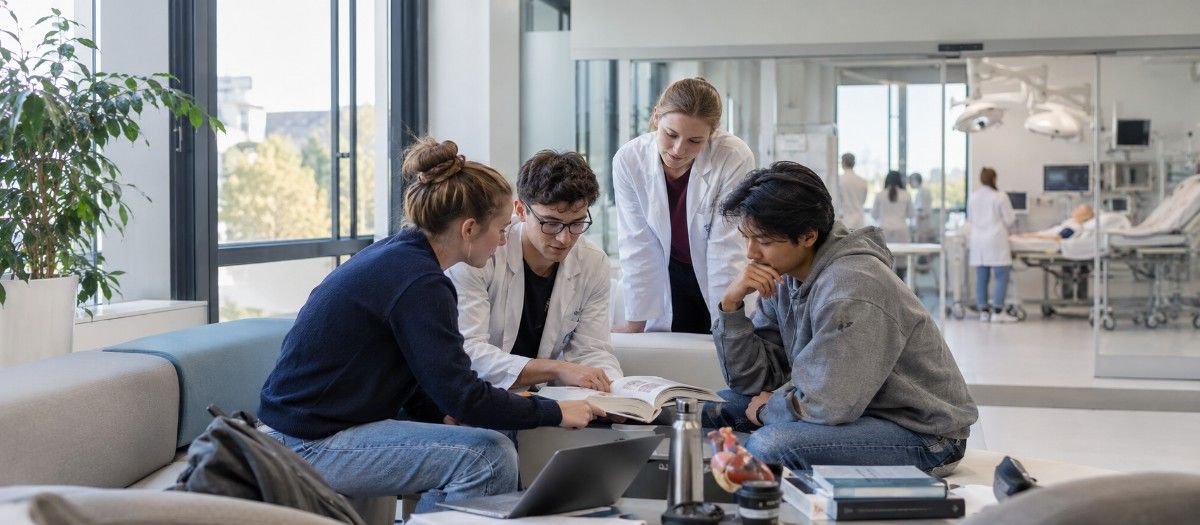
Teaching methods emphasise active learning and student participation. Traditional lectures are supported by problem-based learning, team-based learning, laboratory practicals, anatomy dissections, simulation-based education, digital learning platforms, small-group discussions, and clinical case analysis. This educational model encourages analytical thinking, teamwork, leadership, and evidence-based clinical reasoning from the earliest stages of medical training.
One of the university's distinguishing characteristics is its early clinical exposure. Students begin developing communication skills, professionalism, and patient interaction during the pre-clinical years before progressing into full clinical rotations. Early patient contact allows students to integrate theoretical knowledge with practical healthcare experience while building confidence in professional settings.
Clinical education takes place through a network of affiliated hospitals and healthcare institutions across Sharjah and Dubai. Students receive supervised training in internal medicine, general surgery, paediatrics, obstetrics and gynaecology, psychiatry, neurology, cardiology, oncology, emergency medicine, orthopaedics, anaesthesiology, radiology, dermatology, ophthalmology, family medicine, and other specialised disciplines. These clinical experiences expose students to diverse patient populations while allowing them to develop diagnostic, therapeutic, and procedural competencies.
The University of Sharjah collaborates closely with leading healthcare providers including University Hospital Sharjah, Al Qassimi Hospital, Al Kuwait Hospital, and other government and private healthcare institutions. These partnerships ensure students gain practical experience within technologically advanced hospitals equipped with modern diagnostic imaging, specialised surgical units, intensive care departments, oncology centres, cardiovascular institutes, and multidisciplinary healthcare teams.
Research is a major strength of the College of Medicine. Faculty members conduct internationally recognised research across numerous disciplines including oncology, neuroscience, cardiovascular medicine, endocrinology, diabetes, genetics, molecular medicine, immunology, infectious diseases, regenerative medicine, public health, precision medicine, biomedical engineering, and artificial intelligence in healthcare. The university has invested significantly in research infrastructure through specialised laboratories, innovation centres, and interdisciplinary collaborations.
Medical students are actively encouraged to participate in research activities throughout their studies. Opportunities include faculty-supervised projects, student research programmes, scientific conferences, laboratory placements, innovation competitions, and collaborative international research initiatives. This early involvement develops scientific curiosity while preparing graduates for careers in academic medicine and healthcare innovation.
The University of Sharjah maintains strong international partnerships with universities, research institutes, hospitals, and healthcare organisations throughout Europe, North America, Asia, and the Middle East. Student exchange programmes, visiting faculty initiatives, collaborative research, international electives, and global healthcare partnerships provide students with valuable international exposure and broaden their understanding of different healthcare systems.
Medical education follows internationally recognised accreditation standards while incorporating modern concepts such as evidence-based medicine, patient safety, ethics, communication, healthcare leadership, digital medicine, interdisciplinary collaboration, and community engagement. Students graduate with strong clinical competence supported by a deep understanding of biomedical science and professional responsibility.
Simulation-based education forms an integral component of the curriculum. Advanced clinical simulation centres equipped with high-fidelity patient simulators allow students to practice emergency medicine, surgical procedures, communication skills, resuscitation, teamwork, and clinical decision-making before treating actual patients. These facilities improve both competence and patient safety.
Sharjah offers an outstanding environment for international education. Known as the cultural capital of the UAE, the city combines modern infrastructure with rich Arab heritage. Students benefit from a safe environment, world-class healthcare, modern transportation, extensive recreational facilities, museums, cultural festivals, shopping centres, beaches, and close proximity to Dubai's global business and healthcare sectors.
International students receive comprehensive support through orientation programmes, academic advising, counselling, career guidance, language support, visa assistance, student organisations, and extracurricular activities. On-campus accommodation, modern sports facilities, libraries, research centres, and student services contribute to a high-quality educational experience.
Graduates of the University of Sharjah are recognised for their strong academic preparation, clinical competence, research experience, and professionalism. Many continue into residency programmes, specialist training, postgraduate research, academic medicine, and leadership roles within healthcare systems across the UAE and internationally.
Today, the University of Sharjah continues to strengthen its position among the leading medical universities in the Middle East through excellence in education, innovative research, advanced clinical training, and international collaboration. Its commitment to producing compassionate, knowledgeable, and globally competent physicians makes it one of the region's most respected destinations for medical education