
1. Is the Medicine and Surgery program taught in English?
+Yes, since 2024, making it one of the newest English-taught medical tracks in Italy, running alongside the university's much longer-established Italian-language course.
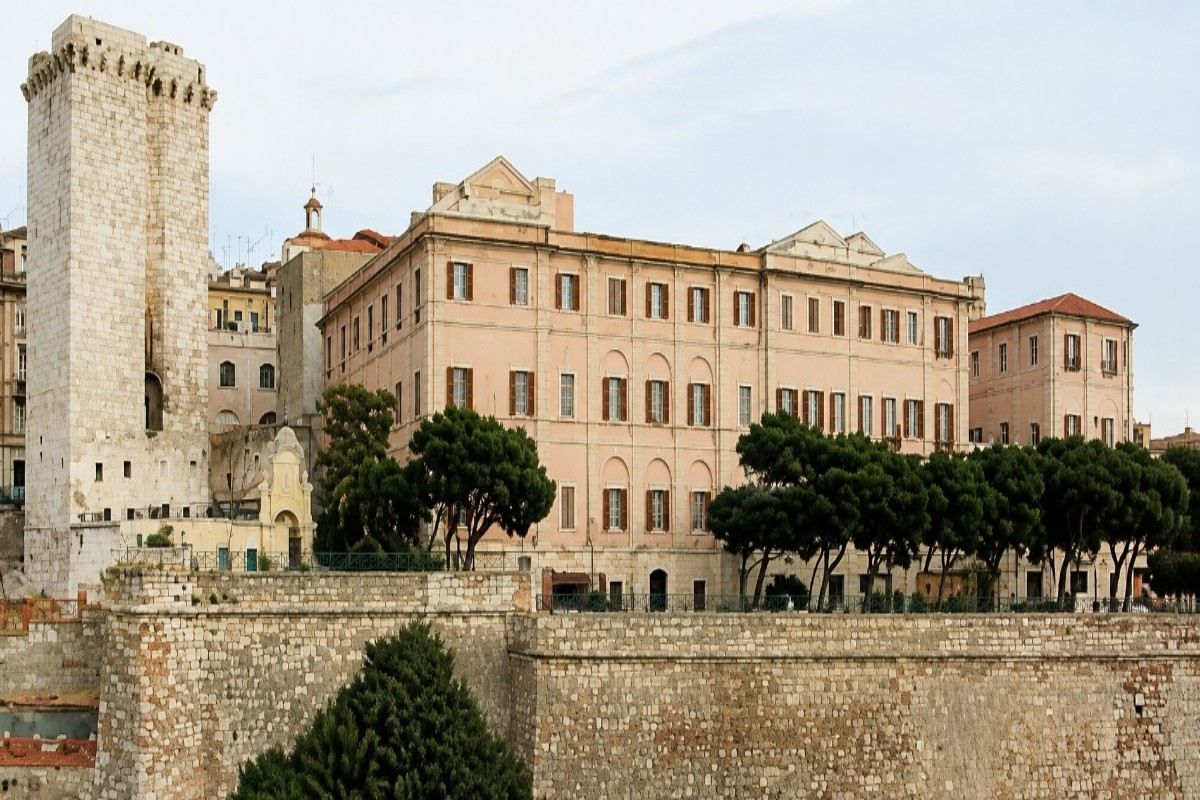
 Italy | Est. 1606
Italy | Compliant with MUR (Italian Ministry of University and Research) regulations and EU directives for medical education. | English medium
Expert will call you within 2 hours
Cagliari is on the southern coast of Sardinia, which is the second-biggest island in Italy. It has a view of the Mediterranean Sea. It is a really old college town, and the medical school has a lot of history behind it, even though the English-taught track for international students is one of the newest in this line. The Faculty of Medicine and Surgery is run by the University of Cagliari, which is often just called UNICA. It is on an island, which is not typical for medical schools in Italy.
With a history that goes back more than 400 years, the university was formed in 1606 under the name Studium Generalis Kalaritanum. It is one of the oldest universities in Italy. It was based on the old universities of Salamanca, Valladolid, and Lleida in Spain, which shows how politically connected Sardinia was to Spain at the time. Medicine and surgery were among the first subjects taught at the university, along with law, philosophy, and the liberal arts. This means that the medical faculty has a deep institutional root and wasn't added later. Today, UNICA has eleven faculties and is a member of the European University Association, which shows that it is a serious research institution with connections around the world.
The most important thing for anyone who wants to apply to study abroad is something that happened not long ago. The English-taught Medicine and Surgery program at Cagliari didn't start until 2024. It follows the same six-year structure as the Italian-taught course that has been there for a long time. This is one of the newest English-language medical tracks in this series. At the time this was written, only one or two full cohorts had completed the program. The degree and the university that offers it have hundreds of years of history between them, but the English-taught pathway for international students is brand new. Applicants should be honest about this when comparing it to more established English tracks at schools like Bari or Vanvitelli.
For admission, you have to take the IMAT, which is the same standardised test that most medical schools in Italy use. It tests your knowledge of biology, chemistry, physics, math, and logic all in one sitting. According to published numbers, Cagliari's first English-taught intake started with a very generous seat allocation compared to other Italian medical schools. There were about 80 EU seats and 20 non-EU seats, which is a much bigger non-EU allocation than some schools that have been around longer. This makes it clear that the university wants to build a real, substantial international cohort from the very beginning of the program, rather than just a few spots at the start.
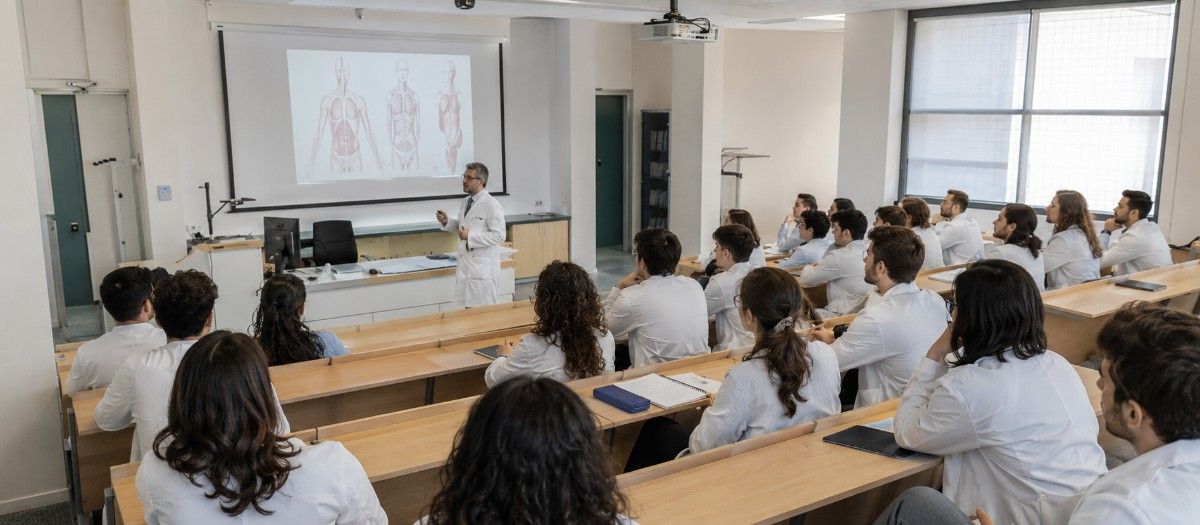
The course is set up in the standard Italian single-cycle Master's way, with twelve semesters spread out over six years. In the first few years, students learn basic preclinical sciences like anatomy, biochemistry, physiology, and histology. They have dedicated study areas with real organ models in the macroscopic anatomy room and microscopes for in-depth histology and pathology study in the microscopy room. In later years, the focus shifts to practical clinical training, leading to more and more significant hospital-based placements. As the English-taught track is still fairly new, the specifics of the later-year clinical rotation structure should be confirmed directly with the university. This is because the structure may not be fully set in stone yet as the first cohorts of students move through the degree.
The clinical training activities are carried out at the Azienda Ospedaliero Universitaria di Cagliari, which is the university's very own teaching hospital. The primary buildings of the university are located in the central business district of the city, but it is located on a separate campus in the Monserrato neighbourhood. Additionally, this ensures that the Faculty of Medicine and Surgery maintains a strong connection to the actual hospital infrastructure. Instead of relying on a relationship with an external organisation that is only tenuously connected, students will be able to gain genuine clinical experience in an operational academic hospital setting.
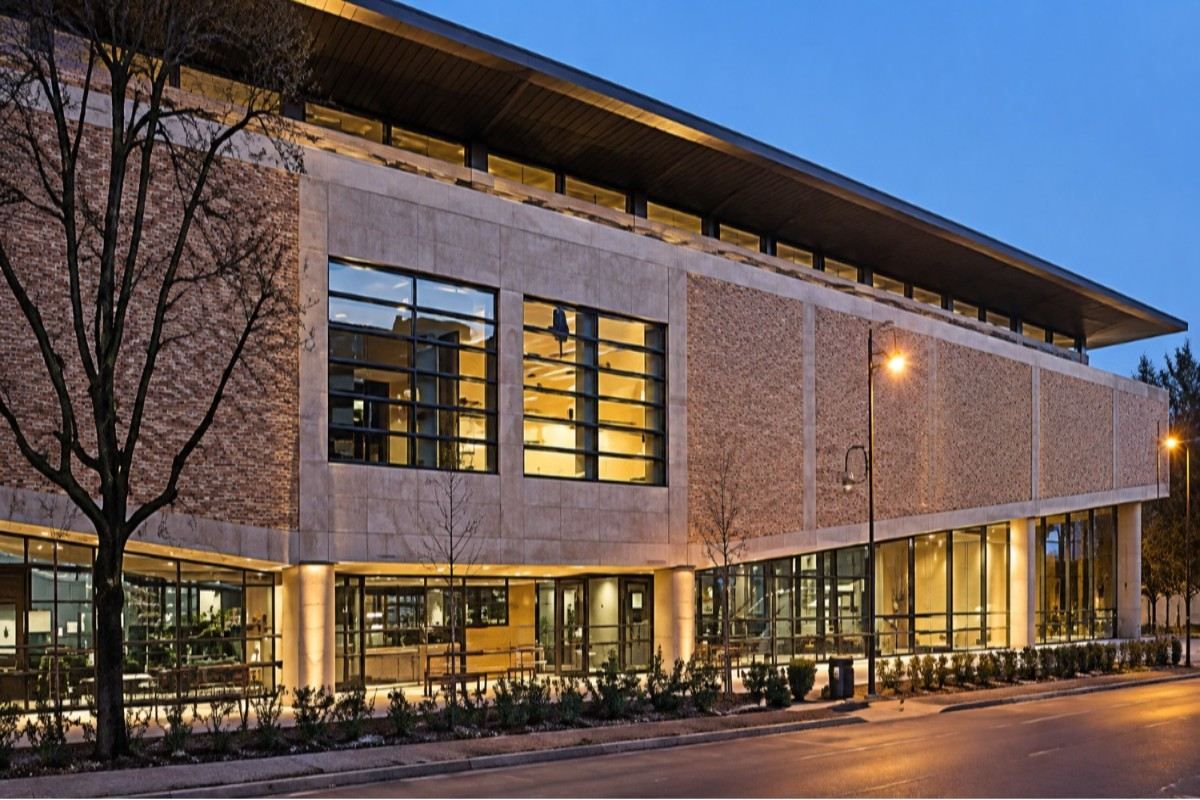
The Beniamino Orrù library and many study rooms spread out across the medical faculty's connected teaching blocks are some of the facilities available. During the six-year course, students move between these buildings. The campus has a lot of parking, which is a practical plus compared to some of Italy's older, denser medical schools in the city centres. The buildings are also more modern and purpose-built.
Cagliari uses Italy's standard ISEE income-based tuition model for costs, which is used by all of the country's public universities. According to public records, the annual tuition ranges from about 16 euros to 3,447 euros, which is paid in three instalments each year. The exact amount depends on the family income of the student. This makes Cagliari's tuition range one of the truly wide ones among the schools we've looked at so far. Each student's actual cost will depend a lot on their own financial documents.
The Italian medical degree is recognised on the same solid national and European basis as all other accredited Italian medical schools. This includes meeting EU standards for medical education (MUR compliance) and the larger EU Directive 2005/36/EC framework. Because the English-taught track is so new, though, people who want to apply, especially those from India or other countries that need separate steps for national recognition, should check directly with the university to make sure that it is currently listed on WDOMS and recognised by NMC. They shouldn't just assume that it is the same as Cagliari's Italian-language program, which has been around for a lot longer.
Cities in the rest of Italy are not at all like Cagliari and the rest of the island of Sardinia. The weather is mostly dry, and the summers are hot and dry. The winters are mild. The beach is famously close, so after tests, students can easily get away to the clear waters of the Mediterranean. It costs a little more to live in Cagliari than in some other cities in Italy, but it costs about the same each month to take the bus or train as it does in other Italian university towns. If you live on an island, life moves more slowly than in towns like Naples or Bari that are nearby. To get to other parts of Italy and Europe, you'll need to fly or take a boat.
One of Italy's English-medium medical schools that stands out is the University of Cagliari. It is on a beautiful island in the Mediterranean, has a very long history, and now has a brand-new English-taught medical pathway with a very generous non-EU seat allocation. Since this track just started a short time ago, applicants should make sure they get straight, up-to-date information on how many people have been accepted, what the curriculum is like, and how they are being recognised. They shouldn't use the university's much longer history with Italian as a replacement for the history of the newer school, which is still being made.
No hidden charges, no donation. The full picture of costs at MBBS in University of Cagliari Faculty of Medicine and Surgery.
Tuition Fee
EUR 16 - 3,447 INR~ 1.47 - 31.7 lakh
EUR 16–1,200 INR~ 1.47–11.04 lakh
Hostel Fee
EUR ~4,800 INR ~44.2 lakh per year
EUR ~4,800 INR ~44.2 lakh per year
Food & Meals
EUR ~4,300 INR ~39.6 lakh
per year
Insurance
EUR 18–1,320 INR ~1.47–11.04 lakh
per year
Donation
No Donation Fee
No Hidden Fee
Total Estimated Cost
EUR 9,100 - 13000,. INR ~83.9 lakh
per Year
25–35%
Average FMGE first-attempt pass rates for students from many overseas medical universities. Students from structured programs consistently score higher.
Students returning to India need to clear the FMGE/NExT exam. MBBS in University of Cagliari Faculty of Medicine and Surgery integrates exam-oriented coaching into the regular curriculum so students are prepared from day one.
A structured program that takes you from foundational sciences to clinical mastery.
Histology, supported by dedicated macroscopic anatomy and microscopy study rooms.
Anatomy, Biochemistry, Physiology
The exact detailed rotation structure should be confirmed directly given the recency of the English track.
Progressive clinical subjects and hospital-based training
Following the standard Italian single-cycle medical degree format. Azienda Ospedaliero Universitaria di Cagliari, on a dedicated Health Sciences campus separate from the university's main city-centre buildings
Substantial hospital placements and a final thesis

Furnished hostel rooms with Wi-Fi, laundry, 24/7 security, and Indian mess on or near campus.
Indian restaurants and mess facilities serving vegetarian and non-vegetarian home-style food daily.
Strong Indian community with cultural events, festival celebrations, and peer support groups.
Students get hands-on clinical training in government and private hospitals affiliated with the university.
Practical information for students planning to study at MBBS in University of Cagliari Faculty of Medicine and Surgery.
Prepare for all seasons. Thermal wear for winters, light clothing for summers. University provides heating in hostels.
Student visa processed with university invitation letter. Direct and connecting flights from major Indian cities.
Health insurance included in fees. Medical facility on campus plus city hospitals easily accessible.
Local SIM cards available. WhatsApp and video calls keep you connected with family back home.
Average monthly expenses of $150–$250 covering food, transport, and personal needs.
University library, online databases, and study groups. Seniors mentor juniors through academic challenges.
Our team guides you through every step — from application to arriving on campus.
Our Italy specialist explains the IMAT process, the income-based fee system, Bologna vs Rome vs other universities, and a total cost comparison with Hungary and Poland.
Our team registers you for IMAT (September test) and begins structured coaching. Biology, Chemistry, Physics, Maths, Critical Thinking. Begin preparation at least 6 months before the test.
Full Italian visa and IMAT application document set academic certificates, income documentation if applicable.
IMAT taken at designated test centres. We provide post-test analysis and guidance on university rankings.
Following IMAT ranking, the Italian university issues an admission confirmation. Our team can help with this process.
Full documentation submitted to the Italian Embassy or Consulate. Begin immediately after receiving the admission letter.
Our team advises qualifying families on the income-based fee reduction process.
Bologna /Rome orientation, accommodation, portico culture, Italian transport, Trenitalia app, banking, SIM card.
Our local team in Bologna (BLQ) or Rome (FCO) meets you and manages the first-week settlement.
We manage the Permesso application at the local Post Office within 8 days of arrival with our support, which is renewed annually.
Admission Helpline — Contact our counsellors for step-by-step assistance.
“The faculty here is incredibly supportive. The clinical training during hospital rotations has given me real confidence in patient care.”
“Affordable fees without compromising on quality. The campus facilities and hostel life made my transition abroad very smooth.”
“English medium instruction and WHO-recognized curriculum were the deciding factors for me. No regrets so far — excellent experience overall.”
“The university helped with everything from visa to accommodation. Hospital exposure from year three has been invaluable for my FMGE prep.”
“Just cleared my licensing exam on the first attempt. The structured coaching and mock exams during final year were a game-changer.”
“Safe campus, good food options, and a strong Indian student community. The teaching methodology is very practical and hands-on.”
Yes, since 2024, making it one of the newest English-taught medical tracks in Italy, running alongside the university's much longer-established Italian-language course.
Yes, the IMAT is required for both EU and non-EU applicants.
Published figures cite around 20 non-EU seats and 80 EU seats for the English-taught track, a notably generous non-EU allocation for such a new program, though applicants should confirm current exact numbers directly with the university.
Tuition follows Italy's ISEE income-based system, ranging from as low as €16 a year up to roughly €3,447 a year depending on documented family income, paid in three instalments annually
Italian medical admissions run through the IMAT rather than NEET; however, standard NMC rules for foreign medical graduates, including FMGE/NExT requirements, still apply for practice in India after graduation.
The underlying Italian medical degree follows the country's standard EU-aligned recognition framework; given how new the English track is specifically, independently confirm current WDOMS and NMC recognition status directly with the university.
At the Azienda Ospedaliero Universitaria di Cagliari, the university's own affiliated teaching hospital, located on a dedicated Health Sciences campus in the Monserrato area.
Because the English-taught Medicine and Surgery program only launched in 2024, meaning only one or two cohorts have started the course so far a genuinely different situation from longer-established English tracks at schools like Bari or Vanvitelli, and worth weighing honestly.
Cagliari offers a distinctive Mediterranean island setting, with a semi-arid climate, hot dry summers, mild winters, and easy access to Sardinia's well-known coastline, alongside a slightly higher cost of living than some mainland Italian cities.
The Beniamino Orrù library, dedicated macroscopic anatomy and microscopy study rooms, and several interconnected teaching blocks across the medical campus, with ample on-site parking.

Our expert counsellors will guide you through the complete admission process — from documents to airport pickup.