
 Partner
📍Bangladesh, Dhaka
 Study destination: Bangladesh

Pursuing MBBS in Bangladesh is an option many Indian students consider because of the country's proximity to India, English-medium medical curriculum, established medical colleges and teaching hospitals. MBBS in Bangladesh for Indian students can also offer a familiar South Asian environment, which may make the transition to studying abroad easier.
Before choosing a Bangladesh medical college, students should verify the college's current regulatory status, course duration, internship structure, clinical exposure, total fees and applicable NMC requirements. The medical college should be assessed individually rather than selected only on the basis of cost or popularity.
Bangladesh attracts Indian medical aspirants because it combines geographical convenience with an established medical education system. The country has government and private medical colleges, teaching hospitals and a structured undergraduate curriculum regulated within the Bangladeshi medical education system.
The Bangladesh Medical & Dental Council (BM&DC) curriculum specifies English as the medium of instruction for the MBBS programme. This is particularly important for Indian students who must consider the NMC rules applicable to foreign medical graduates.
Basic Bangla can still be useful during hospital postings because many patients communicate in the local language.
Bangladesh has medical colleges in several major cities and educational centres, including:
Dhaka
Chattogram
Mymensingh
Rajshahi
Savar
Khulna
Sylhet
Gazipur
Cumilla
The DGME public portal lists both government and private medical colleges and also shows foreign students enrolled in several institutions.
The BM&DC undergraduate curriculum includes basic sciences, para-clinical subjects, clinical medicine and hospital-based training.
Students progress through professional phases covering subjects such as Anatomy, Physiology, Biochemistry, Pharmacology, Pathology, Microbiology, Community Medicine, Medicine, Surgery and Obstetrics & Gynaecology.
Medical colleges in Bangladesh generally operate with associated teaching hospitals where students can receive supervised clinical exposure.
Clinical experience can differ between colleges, so students should compare:
Teaching hospital
Patient flow
Major clinical departments
Bed strength
Clinical group size
Internship arrangements
Bedside teaching
These factors are often more important than the college's marketing claims.
One of the practical advantages of studying MBBS in Bangladesh is its location.
Indian students may find travel easier compared with destinations in Europe or Central Asia, particularly students from West Bengal, Assam, Tripura and other eastern or north-eastern states.
Bangladesh and India share several cultural, food and regional similarities.
This does not make the two countries identical, but Indian students may find certain aspects of daily life more familiar than in many distant destinations.
Foreign-student admission is governed through the relevant academic and government admission process rather than a separate donation-based system.
Students should still ensure that all payments are made only through officially approved channels.
Some potential advantages include:
Structured BM&DC curriculum
Teaching-hospital exposure
Government-regulated foreign-student admission process
Multiple private medical college options
Relatively convenient travel
Similar disease patterns in a South Asian clinical environment
The actual experience depends heavily on the particular medical college selected.
Bangladesh is a South Asian country located to the east of India. Dhaka is its capital and largest educational, commercial and healthcare centre.
Medical colleges are located across the country, although Dhaka and its surrounding areas have a particularly large concentration of private institutions.
Before selecting a city, students should compare:
College location
Hospital exposure
Hostel distance
Food availability
Transportation
Living expenses
Climate
Campus environment
Bangladesh has a strong Bengali cultural identity reflected in language, literature, music, food and festivals.
Students may experience celebrations such as Pohela Boishakh, Eid and Durga Puja along with college cultural programmes and local events.
Bangladesh has a tropical monsoon climate.
Students can expect:
Warm and humid summers
Heavy monsoon rainfall
Mild winters
High humidity during several months
Students should consider the distance between the hostel and college because rainfall can affect daily commuting.
Common Bangladeshi food includes rice, lentils, vegetables, fish, chicken and regional dishes.
Indian students may find familiar South Asian food, while vegetarian and other dietary options depend on the college hostel and surrounding locality.
Medical student life usually includes lectures, laboratory work, professional examinations, hospital postings and independent study.
Depending on the institution, students may also participate in sports, academic societies, cultural events and community-health activities.
Particular | Details |
Course Name | MBBS |
Duration | 5 Years + 1 Year Internship |
Total Duration | Approx. 6 Years |
Medium | English |
Regulator | Bangladesh Medical & Dental Council |
Admission Authority | DGME / relevant authorities |
NEET | Required for Indian students under applicable rules |
Main Admission Period | Session-specific |
Academic Subjects | Physics, Chemistry & Biology required for admission |
Clinical Training | Through medical college teaching hospitals |
Internship | Mandatory one-year rotating internship |
Foreign Student Application | Through DGME system |
NMC Check | Required for Indian students planning to practise in India |
BM&DC officially describes the MBBS programme as five years of study followed by a mandatory one-year rotating internship.
The MBBS in Bangladesh course duration is (5+1) Years, which is constituted of 5 years of clinical study followed by a 1 year compulsory rotating internship.
The academic programme is divided into four professional phases.
Phase | Duration | Major Subjects |
First Phase | 1.5 Years | Anatomy, Physiology, Biochemistry |
Second Phase | 1 Year | Pharmacology, Forensic Medicine and related teaching |
Third Phase | 1 Year | Pathology, Microbiology, Community Medicine |
Fourth Phase | 1.5 Years | Medicine, Surgery, Obstetrics & Gynaecology |
Internship | 1 Year | Rotating clinical internship |
The curriculum gradually moves students from foundational sciences into clinical disciplines and hospital-based practice.
The official BM&DC curriculum identifies English as the medium of instruction for MBBS education.
This makes Bangladesh relevant for Indian students who need to pay close attention to the English-medium requirement under NMC regulations.
However, learning basic Bangla can help students during:
History taking
Patient interviews
Clinical examination
Ward communication
Local travel
Everyday interaction
Bangla is therefore useful clinically even though the academic programme is conducted in English.
The admission timeline for international students is announced for each academic session.
For the 2025–26 foreign-student cycle, DGME operated an online application system and later extended the deadline for applications to non-government medical colleges until January 31, 2026.
Students planning MBBS in Bangladesh 2026–27 should check the new DGME circular once it is officially released rather than relying on previous-session dates.
The overall MBBS cost in Bangladesh includes tuition, hostel, food, local transport, travel and personal expenses. Indian students may spend approximately ₹15,000–₹25,000 per month on living expenses, or around ₹1.8–₹3 lakh per year, depending on the city, hostel type and lifestyle.
Hostel charges vary significantly between colleges; for example, Bangladesh Medical College lists foreign-student accommodation at about US$160–190 per month (approximately ₹15,320–₹18,190 per month)
Based on an approximate exchange rate of US$1 = ₹95.75.
Students should keep a separate budget for tuition fees, visa expenses, India–Bangladesh travel and other university charges.
Monthly expenses vary according to:
City
Hostel arrangement
Food habits
Local transport
Personal lifestyle
Dhaka can generally be more expensive than smaller cities, while students living in college hostels may have more predictable monthly expenses.
Students should prepare a separate living-cost budget instead of assuming that tuition covers everyday expenses.
Eligibility is determined according to the admission rules applicable to the relevant academic session.
A minimum aggregate of 60% in PCB (or 50% for reserved categories like SC/ST as per home-country guidelines, though Bangladesh DGHS evaluates based on GPA conversion. Some key points related to the academic requirements include:
Science background
Physics, Chemistry and Biology
Combined GPA of at least 7.0
Minimum 3.5 GPA in Biology
Required passing years for qualifying examinations
Indian students planning MBBS in Bangladesh for Indian students must satisfy the applicable NEET requirement for foreign medical education. NEET qualification and Bangladesh admission eligibility should be treated separately. A student must satisfy both.
Applicants should meet the age requirement applicable to their admission year.
Indian students should also check the age and eligibility conditions applicable under Indian medical education regulations.
Foreign students may need their academic qualifications assessed for equivalence before admission.
DGME's foreign-student process includes academic verification and requires applicants to follow the prescribed documentation procedure.
Students may require:
Passport
Class 10 certificate
Class 12 certificate
Marksheets
NEET scorecard
Medical fitness certificate
Passport-size photographs
Academic equivalence documentation
Attested certificates
Application forms
Additional DGME documents
Indian students intending to return to India after completing MBBS in Bangladesh must evaluate the programme according to the NMC Foreign Medical Graduate Licentiate Regulations.
Current NMC regulations continue to list the FMGL Regulations, 2021, along with updated FAQs.
Important conditions include:
Minimum 54 months of medical education
At least 12 months of internship
Internship at the same foreign medical institution as required
English as the medium of instruction
Required theory, practical and clinical subjects
Clinical training not split across different countries
Eligibility for registration or licence in the country awarding the qualification
Applicable licensing and registration requirements in India
NMC has specifically warned that deviations relating to course duration, medium of instruction, syllabus, clinical training or internship may affect eligibility for registration in India.
Foreign medical graduates covered by the relevant rules may also need to complete the prescribed supervised internship in India through institutions approved for CRMI.
Students should verify compliance before admission rather than assuming that a foreign MBBS degree automatically guarantees eligibility to practise in India.
Indian students often search for NMC approved medical colleges in Bangladesh, but this phrase should be used carefully.
NMC does not simply guarantee every foreign medical programme based on a college name.
Students should verify the complete programme against the regulations applicable to their admission year.
BM&DC is the professional medical regulator responsible for medical education standards and curriculum within Bangladesh.
The Directorate General of Medical Education manages important medical education and foreign-student systems.
Its public portal lists government and private institutions as well as enrolled foreign students.
Students may also check whether the medical school is listed in the World Directory of Medical Schools (WDOMS).
However, WDOMS listing by itself should not be treated as proof of eligibility to practise in India.
Indian students should specifically check:
Course duration
English-medium teaching
Internship structure
Required medical subjects
Hospital-based clinical training
Local registration eligibility
Rules applicable to their admission batch
Graduates intending to practise outside Bangladesh may need to follow the licensing pathway of that destination.
For example:
India: Applicable NMC pathway
USA: USMLE / ECFMG pathway
UK: GMC pathway
Australia: AMC pathway
Canada: Canadian licensing requirements
There is no single official ranking called the “top 10 medical colleges in Bangladesh,” so students should compare institutions based on regulatory status, teaching hospital, clinical exposure, fees and infrastructure.
Some frequently researched medical colleges include:
Medical College | Location | Course | Foreign Students Listed by DGME |
Dhaka | MBBS | Yes | |
Dhaka | MBBS | International admissions available | |
Dhaka | MBBS | Yes | |
Chattogram | MBBS | Yes | |
Gazipur | MBBS | Yes | |
Rajshahi | MBBS | Yes | |
Mymensingh | MBBS | International applicants considered | |
Enam Medical College | Savar | MBBS | Yes |
East West Medical College | Dhaka | MBBS | Foreign admissions available |
Ad-din Women's Medical College | Dhaka | MBBS | Yes |
DGME's current public student portal confirms foreign-student enrolment across multiple private colleges, including Bangladesh Medical College, Enam Medical College, Anwer Khan Modern Medical College and BGC Trust Medical College.
Students should verify the latest institutional status before admission.
Students researching MBBS in Bangladesh fees should calculate the complete cost of the programme rather than focusing on one advertised figure.
Private medical college fees vary considerably.
As one current example, Bangladesh Medical College published a total tuition fee of USD 49,000 for foreign students in its August 2025 admission notice.
Holy Family Red Crescent Medical College currently publishes admission and other charges of USD 32,250, plus monthly tuition of USD 300, clinical-training charges and other specified fees.
This difference demonstrates why students should never assume that all colleges charge the same amount.
Hostel charges depend on:
College
Room type
Sharing arrangement
Facilities
Location
Whether hostel charges are included in the package
Students should obtain the exact hostel fee in writing.
Food usually remains a separate expense.
Students may use:
Hostel mess
College cafeteria
Local restaurants
Grocery stores
Self-cooking where allowed
Students should check whether health or travel insurance is required by the college or immigration authorities.
Additional expenses may include:
Visa charges
Medical examination
Document attestation
Equivalence processing
Photographs
Local registration
Visa extension where applicable
Additional institutional expenses may include:
Examination fees
University registration
BM&DC-related charges
Clinical-training fees
Field visits
Internship-related charges
Library or laboratory costs
A realistic MBBS in Bangladesh cost for Indian students can vary widely according to college and living arrangements.
Private-college institutional costs can commonly run into several tens of thousands of US dollars over the programme.
Students should calculate:
Tuition + hostel + food + visa + travel + examination charges + personal expenses
before finalising a college.
Students searching for low-cost MBBS in Bangladesh should compare colleges based on complete programme cost rather than tuition alone.
A lower fee should never outweigh:
Regulatory status
Teaching hospital quality
Patient flow
Internship structure
English-medium instruction
NMC compatibility
Hostel arrangements
Location
A slightly more expensive institution may offer better clinical exposure or a more suitable programme structure.
Many medical colleges provide hostel facilities for students.
Depending on the college, accommodation may include:
Furnished rooms
Separate hostels for male and female students
Electricity
Water supply
Security
Common areas
Study areas
Dining arrangements
DGME facility records show substantial hostel capacity at some colleges. For example, Enam Medical College currently lists accommodation capacity for both male and female students on the DGME portal.
Students should confirm actual room conditions and distance from the academic campus before admission.
Food availability is generally familiar to Indian students because Bangladesh shares several South Asian food habits.
Students may find:
Rice
Dal
Vegetables
Chicken
Fish
Eggs
Local breads
Snacks
Indian-style dishes
Vegetarian students should specifically verify mess options.
Indian food may be easier to find in Dhaka and other larger cities than in smaller locations.
The cost of living in Bangladesh for Indian students depends on the city, accommodation and lifestyle.
Expense | Typical Consideration |
Accommodation | Hostel or private room |
Food | Mess, local restaurants or groceries |
Transport | Bus, CNG, ride-hailing or college transport |
Mobile & Internet | Local SIM and data |
Study Materials | Books, printing and stationery |
Personal Expenses | Toiletries, clothing and leisure |
Travel | India-Bangladesh travel |
Students studying outside central Dhaka may find some expenses lower than in the capital.
Scholarship availability for international MBBS students depends on the institution and applicable government schemes.
Possible forms of financial assistance may include:
College-specific scholarships
Merit-based concessions
Government scholarship schemes where applicable
Financial aid offered by individual institutions
Students should ask whether the scholarship applies to foreign MBBS students and obtain all conditions in writing.
Travel convenience is one of the strongest practical benefits of MBBS in Bangladesh for Indian students.
Students may travel through:
International flights
Approved land-border routes
Connecting transport within Bangladesh
Hazrat Shahjalal International Airport, Dhaka is the main international gateway.
Depending on airline schedules and the college location, students may also use other airports within Bangladesh.
Travel should be booked only after:
Admission confirmation
Visa approval
Hostel confirmation
Reporting date confirmation
Students can use several forms of local transportation, including:
Buses
CNG auto-rickshaws
Ride-hailing services
Local taxis
College transport
Private vehicles
Transport availability varies by city.
Students should ideally select accommodation close to the college and teaching hospital.
Several cities have established medical colleges and hospitals.
Dhaka has the largest concentration of medical colleges, hospitals and student facilities.
It offers strong connectivity and access to a wide range of services but can also have higher living costs and heavier traffic.
Chattogram is a major commercial and educational city with several medical institutions.
Mymensingh has a long medical education tradition and a significant healthcare ecosystem.
Rajshahi is known as an educational city and can offer a quieter environment compared with Dhaka.
Savar is close to Dhaka and is home to established medical colleges such as Enam Medical College.
Gazipur is another important location near Dhaka with private medical colleges and access to the capital region.
Medical students may participate in activities such as:
Cricket
Football
Badminton
Volleyball
Table tennis
Debate
Cultural programmes
Academic clubs
Community-health programmes
Student societies
The availability of facilities varies by college.
Students should treat these as secondary factors after academics and clinical training.
Feature | MBBS in Bangladesh | Private MBBS in India |
Course Duration | 5 Years + 1 Year Internship | Usually 4.5 Years + 1 Year Internship |
Medium | English | English |
Admission | Bangladesh eligibility + NEET for Indians | NEET + counselling |
Clinical Environment | Bangladeshi teaching hospitals | Indian hospitals |
Language for Patients | Bangla often useful | Local language often useful |
Tuition | College-specific | Often significantly higher in private colleges |
Travel from India | Relatively convenient | Domestic |
Licensing in India | Foreign-graduate pathway | Domestic registration pathway |
The better choice depends on budget, admission possibilities, college quality and long-term career plans.
Country | Typical Tuition Pattern | Living Cost | Medium | NEET for Indians | Climate | Clinical Environment |
Bangladesh | College-specific private packages | Low–Moderate | English | Required | Similar to eastern India | South Asian patient exposure |
Approx. $4,000–7,000/year | Moderate | English / bilingual | Required | Very cold | University-dependent | |
Approx. $4,000–8,000/year | Moderate | English | Required | Mild to cold | University-dependent | |
Approx. $3,000–5,000/year | Low | English at selected institutions | Required | Cold winters | Developing | |
Approx. $3,500–5,500/year | Low | English at selected institutions | Required | Cold winters | University-dependent | |
Approx. $4,000–6,500/year | Moderate | English at selected institutions | Required | Very cold | University-dependent | |
RMB 30,000–50,000+ | Moderate | English at selected programs | Required | Varies widely | Large hospital system |
Students should compare individual universities rather than selecting a country only by tuition fee.
The BM&DC curriculum follows a structured progression from basic sciences to major clinical subjects.
Phase | Common Subjects |
Phase 1 | Anatomy, Physiology, Biochemistry |
Phase 2 | Pharmacology & Therapeutics, Forensic Medicine & Toxicology |
Phase 3 | Pathology, Microbiology, Community Medicine |
Phase 4 | Medicine, Surgery, Obstetrics & Gynaecology |
Internship | Rotating clinical training |
During MBBS in Bangladesh, students study areas including:
Anatomy
Physiology
Biochemistry
Pharmacology
Pathology
Microbiology
Community Medicine
Forensic Medicine
Internal Medicine
Surgery
Pediatrics
Obstetrics & Gynaecology
Clinical diagnostics
Public health
Medical ethics
Patient communication
The exact teaching arrangement can differ slightly by institution while following the prescribed national curriculum.
Clinical training is an important factor when selecting a Bangladesh medical college for Indian students.
Students gradually move from classroom learning to patient-based clinical teaching.
Hospital exposure may include:
Ward rounds
History taking
Clinical examinations
Case presentation
Medicine postings
Surgery postings
Pediatrics
Obstetrics & Gynaecology
Emergency exposure
Diagnostic departments
Community-health work
Before admission, students should ask how much direct supervised clinical exposure is available rather than evaluating only the size of the hospital.
The major practical advantages can be summarised as follows.
The national MBBS curriculum uses English as the teaching medium.
Travel between India and Bangladesh can be easier than travel to many distant MBBS-abroad destinations.
The South Asian disease profile and patient environment may feel more familiar to Indian students.
The national curriculum includes a compulsory one-year rotating internship.
Students can compare colleges in Dhaka and several other cities based on fee, hospital, hostel and location.
Cultural and dietary similarities can make day-to-day adjustment easier for some Indian students.
Before finalising MBBS in Bangladesh, students should evaluate the following points carefully.
Verify the medical college on official Bangladesh medical education portals.
Compare the current programme with the NMC requirements applicable to the student's batch.
Confirm where the internship is completed, its duration and whether the student is eligible to complete it.
Verify the teaching hospital, patient load and bedside-learning opportunities.
Indian students should understand whether the qualification makes the graduate eligible for registration or licensure in Bangladesh under the applicable framework.
Calculate tuition, hostel, food, travel, examination and documentation expenses.
Compare room quality, distance from campus, food and security.
Students planning to return to India should understand the NMC/FMGL pathway before admission.
Completing MBBS from Bangladesh can lead to several career routes, but medical practice always depends on the licensing requirements of the destination country.
Indian graduates must satisfy the applicable NMC requirements before they can obtain medical registration in India.
A Bangladesh MBBS degree does not automatically provide the right to practise in India.
Eligibility may depend on:
Admission year
NMC rules applicable to the batch
Course duration
Internship
Clinical training
Local registration eligibility
Applicable Indian licensing examination
Graduates can pursue postgraduate medical education in India or abroad after meeting the relevant entry and licensing conditions.
Common postgraduate areas include:
Medicine
Surgery
Pediatrics
Obstetrics & Gynaecology
Radiology
Dermatology
Orthopedics
Psychiatry
Anesthesiology
Cardiology
Graduates may also explore pathways in countries such as:
The USMLE and applicable ECFMG requirements apply.
Graduates must follow the GMC registration pathway.
Applicants may explore the AMC route.
Other countries have separate examination, credential and language requirements.
The exact process varies by academic session, but foreign students generally follow a structured admission route. You must know that AMW Career Point helps in you in completing all the steps of the admission process which are listed below:
Compare:
College status
Fees
Teaching hospital
Clinical exposure
Hostel
City
Internship
NMC compatibility
Foreign applicants register through the official DGME foreign-student system.
Documents are reviewed for academic eligibility and equivalence.
Eligible applicants may receive the required selection or admission documentation according to the prescribed process.
Students should pay only after verifying:
Official fee letter
College bank details
Payment schedule
Refund policy
Prepare the required admission and immigration documents.
Apply for the appropriate Bangladesh student visa.
Travel after confirming visa, reporting date and hostel arrangements.
After arrival, students generally complete registration, submit original documents and attend orientation.
Students applying for MBBS in Bangladesh may need:
Valid passport
Class 10 certificate
Class 10 marksheet
Class 12 certificate
Class 12 marksheet
Physics, Chemistry and Biology records
NEET scorecard
Passport photographs
Medical fitness certificate
Birth certificate where required
Academic-equivalence documentation
Attested educational certificates
Application form
Additional DGME or college documents
The exact attestation process should be checked for the relevant admission session.
Typical documents may include:
Passport
Visa application form
Passport photographs
Admission / selection letter
Academic certificates
Proof of financial support where required
Medical documents where required
Additional documents requested by the Bangladesh authorities
Students should use the latest visa checklist issued by the Bangladesh diplomatic mission before submitting the application.
Explore active university options with fee, duration, and accreditation details before you shortlist your preferred campus.
PartnerChoose the right country, shortlist the right university, and understand your next steps with one clear plan built around your NEET score and budget.
Arrange a free counselling sessionMBBS in Uzbekistan 2026-27: Fees, Universities, NMC Advisory & Everything Else Nobody Tells You Upfront
Lowest-Cost NMC-Compliant MBBS Abroad | English Medium | No Donation | ₹15-35 Lakh Total | National FMGE Average 25%
MBBS in Russia 2026 Affordable Fees, NMC-Compliant Universities & Global Recognition
MBBS in Belarus 2026-27: Fees, Universities, Eligibility, Admission & NEET
● NMC, WHO/WDOMS, and EU/ECTS-recognized universities are available; always verify your specific university's current standing directly rather than relying on a blanket "NMC approved" claim
MBBS in Bangladesh for Indian students can be considered by candidates who meet academic eligibility and choose a suitable medical college with appropriate clinical training, internship and NMC compliance.
The official programme consists of five years of academic study followed by a one-year rotating internship.
Indian students planning to study medicine abroad must satisfy the applicable NEET requirement along with Bangladesh's admission rules.
Fees vary significantly between colleges. For example, Bangladesh Medical College currently publishes a total tuition fee of USD 49,000 (approximately ₹46,91,750 or ₹46.92 lakh) for foreign students.
Expert will call you within 2 hours
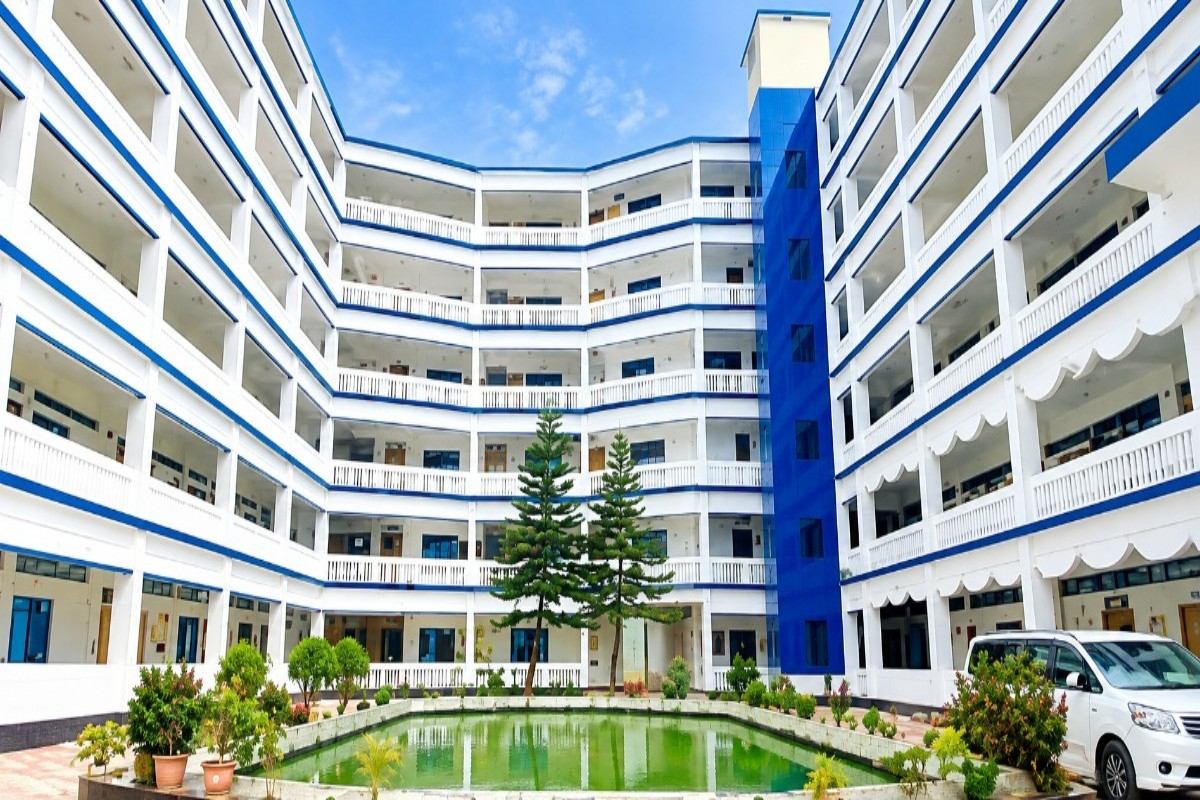
Explore fees, eligibility, and admission guidance for MBBS in Dhaka Central International Medical College and Hospital in Bangladesh.
 Partner
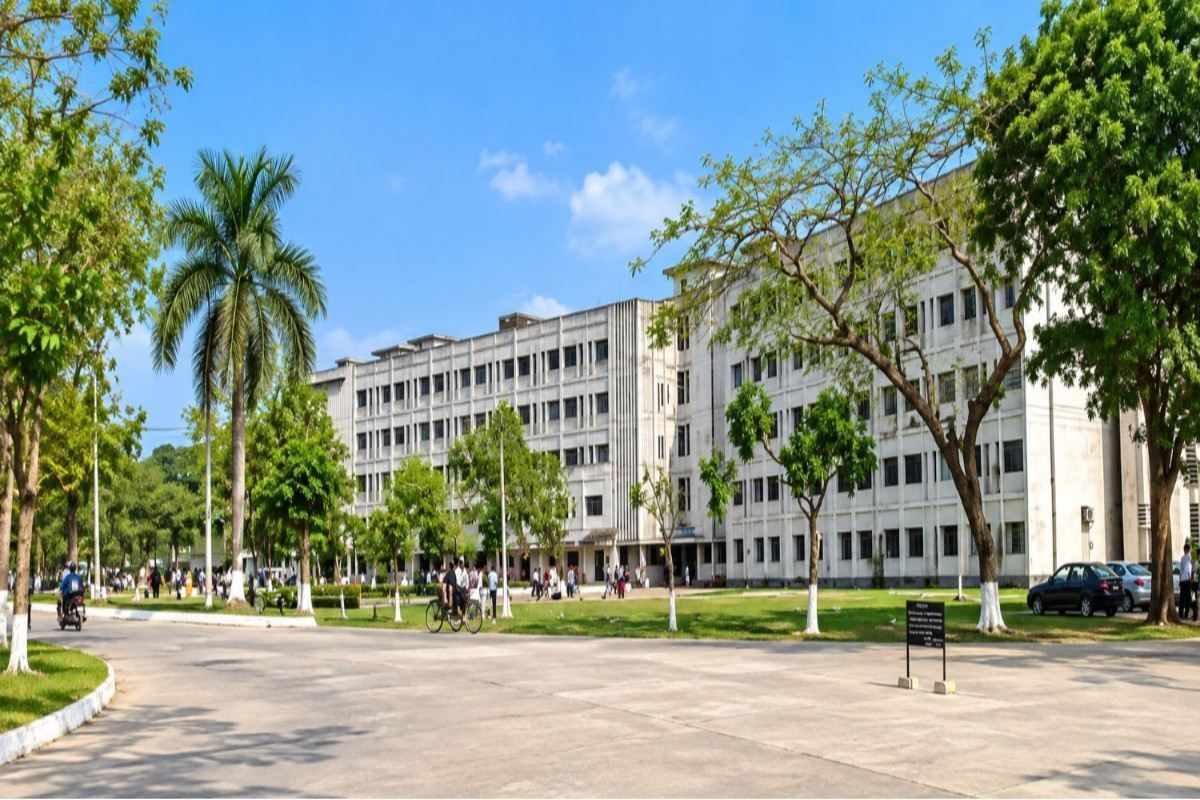
Explore fees, eligibility, and admission guidance for MBBS in Brahmanbaria Medical College in Bangladesh.
 Partner
Explore fees, eligibility, and admission guidance for MBBS in Rangpur Medical College and Hospital in Bangladesh.
 Partner
Explore fees, eligibility, and admission guidance for MBBS in Shaheed Tajuddin Ahmad Medical College in Bangladesh.
 Partner
Explore fees, eligibility, and admission guidance for MBBS in Shaheed Monsur Ali Medical College in Bangladesh.
 Partner
Explore fees, eligibility, and admission guidance for MBBS in Shaheed Syed Nazrul Islam Medical College in Bangladesh.
Our team provides university-specific guidance and a full Bangladesh context briefing at every intake. Book a free counselling session →
Yes. Yes, in Bangladesh the medium of study is English for the MBBS curriculum.
Eligibility generally includes 10+2 or equivalent with Physics, Chemistry and Biology, the prescribed GPA/academic requirements of Bangladesh and NEET qualification for Indian students.
A Bangladesh medical qualification may be used to pursue registration in India only after the graduate satisfies the applicable NMC foreign medical graduate requirements. A foreign degree alone does not automatically grant registration.
Frequently researched institutions include Bangladesh Medical College, Enam Medical College, Holy Family Red Crescent Medical College, East West Medical College, Anwer Khan Modern Medical College and BGC Trust Medical College.
The process generally includes college selection, DGME foreign-student application, academic verification, selection, fee payment, visa processing and college reporting.
Yes. Graduates can apply for postgraduate medical education in India or abroad after meeting the examination, eligibility and registration requirements of the destination country.