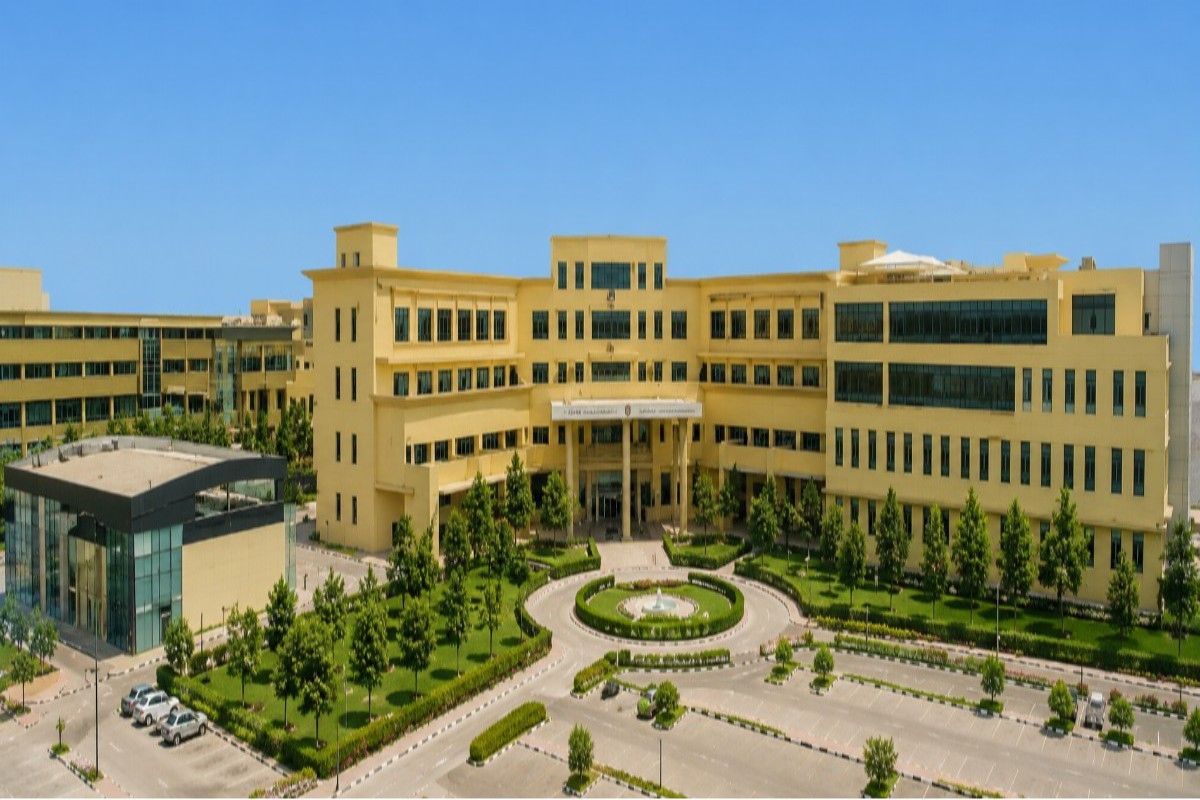
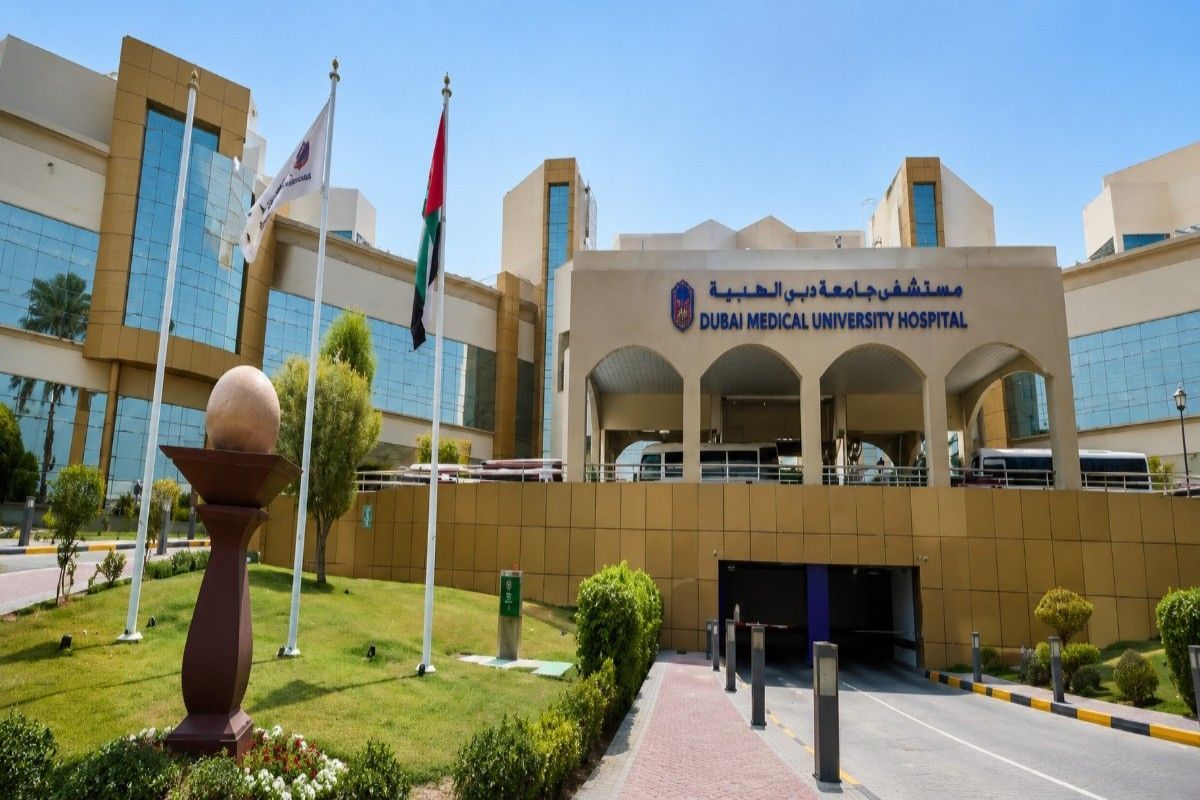
If you’ve spent any time on NEET-abroad forums, you’ve probably noticed the UAE coming up more and more, usually right after the Russia-Georgia-Central Asia crowd, and usually with a “but isn’t it too expensive?” attached. That question is fair. It is more expensive than Central Asia. It’s also a very different kind of MBBS experience, and for a specific type of student, it’s worth every extra dirham.
MBBS in UAE means studying medicine at one of seven NMC-approved private medical universities across Dubai, Abu Dhabi, Sharjah, Ajman, and Ras Al Khaimah: all English-medium, all built around real hospital partnerships rather than the classroom-heavy model you’ll find elsewhere. The degree takes 5 to 6 years, depending on the university, and most graduates take internships at the same Gulf hospital networks that trained them, for at least a couple of years before deciding on India, the US, or somewhere else entirely.
Who actually fits here? Mostly NEET-qualified Indian students who didn’t get into a government college back home and don’t want to pay ₹1-1.5 crore for a private seat in India either, but who also want something a notch above the cheapest options abroad. Proximity matters too: a 3-4 hour flight from most Indian cities, a huge Indian expat community, and food that doesn’t require adjustment. If budget is your only constraint, Central Asia will beat UAE every time. If you want infrastructure, safety, and a Gulf-standard clinical environment and can stretch the budget, keep reading.
About the UAE
The UAE is a federation of seven emirates (Abu Dhabi, Dubai, Sharjah, Ajman, Umm Al Quwain, Ras Al Khaimah, and Fujairah) that transformed from a modest trading and fishing economy into one of the world’s most developed nations within two generations. For a medical student, what matters practically is this: the country runs on world-class infrastructure, has one of the highest expatriate populations anywhere (Indians alone make up over 3.5 million residents), and has poured serious money into building a modern healthcare system.
The healthcare sector here isn’t an afterthought. It’s a stated national priority, backed by entities such as the Department of Health Abu Dhabi (DOH) and the Dubai Health Authority (DHA), and staffed heavily with internationally trained doctors. That matters for students because medical universities in the UAE are typically attached to real hospital networks from day one, not standalone teaching blocks with occasional clinical visits.
On the education side, the UAE Ministry of Education and the Commission for Academic Accreditation (CAA) regulate universities with a level of rigor that Gulf-watchers often compare favorably to Western accreditation bodies. Combine that with English-medium teaching across every medical program, and you get a system that’s increasingly positioning itself as a serious, if pricier, alternative to the traditional MBBS-abroad routes.
Why Study MBBS in UAE?
Modern infrastructure: Purpose-built campuses with simulation labs, not repurposed buildings
Direct hospital affiliations: Clinical exposure starts earlier than in many competing countries
English medium throughout: No language transition required
International faculty drawn from Europe, India, Egypt, and the broader Arab world
High safety standards, including for women, which matters more than most guides admit
Short flight home: Most Indian metros are 3-4 hours away
Strong research culture emerging at institutions like MBRU and Khalifa University
Career scope within the Gulf itself: A large expat-serving healthcare industry that regularly hires its own graduates
Is MBBS in UAE Good for Indian Students?
Broadly, yes, with a caveat. Academically and in terms of infrastructure, UAE medical schools hold up well against most study-abroad alternatives, and several (MBRU, Khalifa) are ambitious, research-driven institutions rather than degree mills. The NMC recognizes graduates from NMC-listed UAE universities, Indian food and community support are everywhere, and safety is rarely a real concern.
The caveat is cost. At AED 100,000-160,000 a year in tuition alone, total program costs typically land between ₹1.5 crore and ₹3.5 crore all-in, squarely competing with (and sometimes exceeding) private MBBS seats in India. So “good for Indian students” really means “good for Indian students who’ve priced this against their actual alternatives and are comfortable with the number.”
Top Reasons to Choose UAE for MBBS
NMC-recognized universities with clean regulatory standing
Direct hospital-integrated clinical training from an early stage
English-medium teaching with zero language barrier
Extremely short travel time to India
Large, established Indian community for cultural comfort
Genuinely high personal safety, including for women
Growing research and postgraduate ecosystem (MBRU, Khalifa)
Latest Updates for the 2026-27 Admission Cycle
A few things changed recently that most guides still get wrong:
Gulf Medical University no longer officially offers “MBBS”; it was renamed to a 6-year MD program starting AY2022-23. The degree content and NMC recognition are unaffected, but if you’re filling out forms or comparing “MBBS” fee tables, GMU’s listing is technically an MD.
Khalifa University’s medical program is graduate-entry only, a 4-year MD open exclusively to students who already hold a bachelor’s degree. It is not a direct-from-12th pathway, unlike the other six universities on this list. This single fact trips up many NEET applicants every cycle.
NExT (National Exit Test) remains delayed. As of mid-2026, the NMC has confirmed that mock tests will run for another 3-4 years before full rollout, meaning FMGE remains the operative licensing exam for the 2026-27 batch and will likely be for several years after. Don’t let anyone tell you FMGE is already gone; it isn’t.
Tuition fees at most UAE medical universities have risen 5-8% year-on-year; the numbers in this guide reflect the AY2025-26/2026-27 published rates.
Top Medical Universities in UAE, Verified Fee Table (2026-27)
All figures cross-checked against official university pages as of July 2026. Fees rise roughly 5-10% annually at most UAE institutions, so treat these as this year’s baseline, not a fixed number for your entire program.
University | Location | Program & Duration | Annual Tuition (AED) | Approx. Total Program Cost (AED) |
Gulf Medical University (GMU) | Ajman | MD, 6 years (renamed from MBBS, AY2022-23) | AED 155,000/yr + AED 2,100 evaluation fee | AED 930,000+ |
Dubai Medical College for Girls (DMCG) | Dubai (women only) | MD, 6 years | AED 126,000/yr (120,000 + 5% VAT) | AED 756,000 |
MBRU | Dubai | MD, 6 years (direct-entry) or 4 years (graduate-entry) | AED 160,000/yr | AED 960,000 (6-yr track) |
University of Sharjah – College of Medicine | Sharjah | MBBS, 6 years | AED 107,000–120,000/yr (approx.) | AED 650,000+ |
Ajman University – College of Medicine | Ajman | MD, 6 years (2+4 structure) | AED 105,000–127,000/yr (approx.) | AED 625,000+ |
Khalifa University – College of Medicine | Abu Dhabi | MD, 4 years (graduate-entry ONLY, needs a completed bachelor’s first) | AED 120,000–150,000/yr (approx.) | AED 480,000–600,000 (4-yr) |
RAK Medical & Health Sciences University | Ras Al Khaimah | MD/MBBS, 6 years | AED 100,000–130,000/yr (approx.) | AED 600,000–780,000 |
A note on the ranges above: GMU, DMCG, and MBRU publish exact tuition figures on their official sites, which is why those three numbers are precise. Sharjah, Ajman, Khalifa, and RAK gate their exact fee schedules behind login portals or year-specific PDFs that change with little public notice; the ranges shown reflect the most recent, cross-checked figures from multiple independent sources. Still, you should get written confirmation from the admissions office before wiring any money.
Critical factual corrections nobody else gets right.
GMU dropped the “MBBS” label in AY2022-23 in favor of a 6-year MD. The curriculum and NMC standing are unchanged, but if you see a competitor site still calling it “MBBS at GMU,” that’s outdated.
Khalifa University is graduate-entry only. If you’re a 12th-grade NEET aspirant looking for direct admission, Khalifa is not an option for you yet; you’d need to complete a relevant bachelor’s degree first, then apply to its 4-year MD.
University Comparison Table
University | Approx. QS/Regional Standing | Tuition (AED/yr) | Internship Included? | Hospital Affiliation | Medium | Scholarships |
GMU | THE Impact 101-200 | 155,000 | Yes | Thumbay Hospitals & Clinics | English | Merit-based, up to 40% |
DMCG | Regional (women-focused) | 126,000 | Yes | Dubai Health network | English | Limited, need-based |
MBRU | QS 701-850 | 160,000 | Yes | Dubai Academic Health Corporation | English | Future Doctors Scholarship, up to 30% |
Sharjah | Regional strong | 110,000-120,000 | Yes | University Hospital Sharjah | English | Merit-based |
Ajman | Regional | 105,000-127,000 | Yes | Ajman-affiliated hospitals | English | Merit-based |
Khalifa | QS Top 400 (university-wide) | 120,000-150,000 | Yes | Abu Dhabi hospital network | English | Competitive, research-linked |
RAKMHSU | Regional | 100,000-130,000 | Yes | RAK Hospital | English | Limited |
University-Wise NEET Cutoff & Admission Trends
This is genuinely one of the most-searched data points among NEET-track applicants, and almost nobody publishes it clearly, mainly because most UAE universities don’t release an official cutoff rank the way Indian government colleges do. What we can say with reasonable confidence, based on counselor-reported trends over the last two admission cycles:
University | Typical NEET Qualifying Requirement | Realistic Competitiveness |
GMU | NEET qualifying score + 80%+ in 12th PCB | Moderate, accessible to a wide qualifying band |
DMCG | NEET qualifying score + strong PCB percentage | Moderate to high (limited seats, women-only) |
MBRU | NEET qualifying score + MMI performance | High, selective interview process matters more than raw score |
Sharjah | NEET qualifying score + university-set percentage | Moderate |
Ajman | NEET qualifying score + university-set percentage | Moderate |
Khalifa | Not NEET-gated at entry (graduate-entry, bachelor’s-based) | High, small graduate-entry cohort |
RAKMHSU | NEET qualifying score + university-set percentage | Moderate to accessible |
A practical note worth being honest about: unlike Indian NEET counseling, UAE universities don’t publish a closing rank or percentile after each cycle. “NEET qualifying” (the minimum percentile the NMC sets each year for MBBS-abroad eligibility) is usually the real gate, not a competitive cutoff rank. Interview performance, PCB percentage, and English proficiency scores end up mattering more than your NEET rank itself at most of these universities, with MBRU as the clearest example, given its MMI-heavy selection process. Anyone promising you an exact “closing rank” for a UAE university is guessing.
MBBS in UAE at a Glance
Fee Range (all-in) | ₹1.6 crore – ₹3.25 crore |
Duration | 4–6 years |
Top Universities | GMU, MBRU, DMCG, Sharjah, Ajman, Khalifa, RAKMHSU |
Recognition | NMC, WHO-listed |
Intake | September (primary), some January intakes |
Best For | NEET-qualified students prioritizing safety, infrastructure, proximity to India |
MBBS Fee Structure, Full Breakdown
Nearly every competitor blog uses the term “tuition fee” and assumes that’s the total cost. It isn’t. Here’s the honest breakdown:
Cost Head | Typical Range (AED/year) |
Tuition | 100,000 – 160,000 |
Hostel | 12,000 – 35,000 |
Health Insurance | 3,500 – 4,500 |
Visa & Sponsorship | 1,500 – 4,000 |
Medical Checkup | 500 – 1,000 |
Registration/Application | 1,000 – 2,100 (one-time) |
Books & Lab Fees | 3,000 – 6,000 |
Food & Personal Expenses | 18,000 – 36,000 |
Rule of thumb: whatever the published tuition figure is, add roughly AED 40,000- 55,000 per year on top for hostel, food, insurance, and incidentals to get a realistic all-in annual figure.
Total Cost to Study MBBS in UAE, All-In Summary
University | All-In Annual Cost (approx.) | All-In Total Program Cost (approx.) |
GMU | AED 200,000 | AED 1.15–1.25 million (₹3–3.25 crore) |
Sharjah | AED 160,000 | AED 850,000–950,000 (₹2.2–2.5 crore) |
Ajman | AED 155,000 | AED 800,000–900,000 (₹2.1–2.3 crore) |
Khalifa (4-yr) | AED 175,000 | AED 620,000–750,000 (₹1.6–1.95 crore) |
RAKMHSU | AED 150,000 | AED 780,000–950,000 (₹2–2.5 crore) |
DMCG | AED 175,000 | AED 950,000–1 million (₹2.5 crore) |
MBRU | AED 205,000 | AED 1.2–1.25 million (₹3.1–3.25 crore) |
These are estimates built from official tuition plus typical hostel/food/insurance costs. Always request an itemized cost sheet from the university before finalizing.
Cost of Living in UAE
Accommodation (off-campus, shared): AED 1,500-3,000/month
Food: AED 800-1,500/month if cooking mostly at home; more if eating out regularly
Transport: AED 200-400/month using metro/bus (Dubai and Abu Dhabi have solid public transport; Ajman and RAK rely more on university shuttles or taxis)
Internet: AED 250-400/month for home broadband
Laundry: AED 100-200/month
Entertainment/miscellaneous: AED 300-600/month
Realistically, budget AED 3,000-4,000 a month for a student living moderately, on top of tuition and hostel.
UAE City Comparison for Medical Students: Dubai vs Abu Dhabi vs Sharjah vs Ajman vs Ras Al Khaimah
Nobody else compares the emirates against each other from a student-living angle, which is odd, because the difference between studying in Dubai and studying in Ajman is bigger than most guides admit.
City | Cost of Living | Metro/Transit | Indian Community | Vibe |
Dubai (MBRU) | Highest | Excellent (metro + bus) | Very large | Fast-paced, international, expensive |
Abu Dhabi (Khalifa) | High | Good bus network | Large | Calmer, more government-driven, spacious |
Sharjah (University of Sharjah) | Moderate | Limited (relies on Dubai proximity) | Large, conservative | Family-oriented, alcohol-free, budget-friendlier than Dubai |
Ajman (GMU, Ajman University) | Lower | Limited, bus/taxi-dependent | Large, growing fast | Quieter, smaller-city feel, cheapest of the five |
Ras Al Khaimah (RAKMHSU) | Lowest | Minimal, mostly taxi/university shuttle | Smaller but established | Most laid-back, longer commute to Dubai/Sharjah social life |
If monthly budget is tight, Ajman and RAK genuinely stretch your rupee furthest. If you want a metro at your doorstep and a buzzing social scene, Dubai (and by extension MBRU) is worth the premium. Sharjah sits between and suits students who want a calmer, more conservative environment without sacrificing too much of the connectivity to Dubai.
Student Life in UAE
Campuses generally run active student clubs, cultural, sports, and academic societies, and universities host multicultural events that reflect the diverse mix of expatriates on campus. Dubai and Sharjah in particular have a strong festival calendar (Diwali celebrations are common given the large Indian community), and most universities organize orientation trips, sports days, and academic competitions throughout the year.
Years 1-2 (Pre-clinical): Anatomy, Physiology, Biochemistry, foundational sciences
Years 3-4 (Para-clinical/early clinical): Pathology, Pharmacology, Microbiology, with early hospital exposure beginning at several universities from year 2-3 onward
Years 4-5 (Clinical): Rotations in Medicine, Surgery, Obstetrics & Gynecology, Pediatrics, and allied specialties
Final year/Internship: Supervised clinical internship, typically 12 months, at an affiliated hospital
Clinical Exposure
Clinical exposure typically begins earlier in the UAE system than in many comparable countries; some universities integrate hospital visits as early as year 2. GMU’s affiliation with the Thumbay Hospitals network, MBRU’s integration within the Dubai Academic Health Corporation, and DMCG’s ties to the Dubai Health system all mean that clinical training occurs within functioning hospitals rather than in isolated teaching units.
Internship Details
Internships run for 12 months and are a mandatory NMC requirement for eventual Indian licensing, a rule tightened further under NMC’s 2026 clarifications on program duration and internship documentation. Whether the internship is paid varies by university and hospital partner; most Gulf hospital internships offer a modest stipend rather than a full salary, and this detail is worth confirming directly with each university, since public information here is thin across the board.
Recognition & Accreditation, Explained Plainly
NMC (National Medical Commission, India): Confirms your degree is recognized for practicing in India; check the university is on NMC’s current approved list before applying
WHO’s World Directory of Medical Schools: A global listing confirming the school meets baseline international standards; being listed here is necessary but not sufficient for Indian recognition
WFME (World Federation for Medical Education): An international quality benchmark; WFME accreditation is increasingly required for graduates aiming at US licensing pathways
ECFMG/FAIMER: Relevant only if you’re aiming for USMLE and US practice, confirms your medical school meets the standards needed to sit US licensing exams
UAE Ministry of Education / CAA: The local UAE accreditation authority confirming the university itself is legitimately licensed to operate in the country
Is MBBS from UAE Valid in India?
Yes, provided the specific university and program are listed on the NMC’s current approved list, and provided you clear the required licensing exam (FMGE currently, NExT eventually) within the stipulated window after graduation. This is not automatic just because the country is “UAE”; always verify the exact university listing on the NMC portal before applying, since accreditation status can change.
NMC Guidelines Explained
Under the NMC’s Foreign Medical Graduate Licentiate Regulations, 2021, any Indian student pursuing an MBBS-equivalent degree abroad must hold a valid NEET qualifying score, complete a program of at least 54 months including a 12-month internship, and obtain an NMC Eligibility Certificate before enrolling, not after. In March 2026, the NMC issued further clarification tightening enforcement around online/COVID-era teaching disruptions and internship documentation, which is worth knowing if you’re evaluating a university that had any pandemic-era irregularities (this doesn’t apply to any of the seven UAE universities profiled here, all of which have run fully in-person programs).
FMGE / NExT Eligibility, What’s Actually Current in 2026
This is where almost every competitor guide is out of date. Here’s where things actually stand as of mid-2026:
FMGE remains the operative licensing exam for foreign medical graduates in 2026 and is expected to stay that way for several more years
NExT (National Exit Test) was meant to replace FMGE, but the NMC has publicly confirmed a phased rollout with mock tests running for 3-4 years before full implementation, meaning students graduating in 2026-2027 should prepare for FMGE, not NExT, as their actual licensing hurdle
Students should still understand NExT conceptually, since it will eventually apply, but shouldn’t restructure their exam prep around a test that isn’t live yet
Career Opportunities After MBBS, Country-wise
India: Requires clearing FMGE (or eventually NExT) for licensure; strong demand for doctors overall
UAE: Requires DHA, DOH, or MOH licensing depending on emirate; many graduates start here given existing hospital relationships
USA: Requires USMLE Steps 1-3 plus ECFMG certification, a long, competitive but well-trodden path
UK: Requires PLAB or an equivalent GMC-recognized route
Canada: Requires MCCQE and residency matching through CaRMS
Australia: Requires AMC exams and supervised practice periods
Germany: Requires Approbation (license to practice) and German language proficiency (usually B2/C1)
Medical Licensing Exams Explained
DHA (Dubai Health Authority): Licensing exam to practice in Dubai specifically
DOH (Department of Health Abu Dhabi, formerly HAAD): Licensing exam for Abu Dhabi
MOH (Ministry of Health, UAE): Federal-level licensing covering the other emirates
USMLE: The US licensing exam sequence, required for American residency
PLAB: The UK’s licensing route for international medical graduates
AMC: Australia’s equivalent exam and assessment pathway
Salary After MBBS, Country-wise Comparison
Country | Approx. Entry-Level Doctor Salary (Annual) |
India | ₹6–12 lakh (government); higher in private practice over time |
UK | GBP 32,000–40,000 as a Foundation doctor |
Canada | CAD 60,000–80,000 as a resident |
Australia | AUD 70,000–90,000 as intern/resident |
Germany | EUR 55,000–65,000 as Assistenzarzt |
USA | USD 60,000–75,000 as a resident; USD 200,000+ post-residency |
UAE | AED 180,000–300,000 (₹47–78 lakh) |
Figures are indicative averages and vary heavily by specialty, city, and experience; treat these as a starting reference, not a guarantee.
Top Recruiters/Employers in UAE Healthcare
Cleveland Clinic Abu Dhabi
Mediclinic Middle East
NMC Healthcare (unrelated to India’s NMC, a UAE hospital group)
Aster DM Healthcare
Thumbay Hospitals & Clinics
Dubai Health (public network)
SEHA (Abu Dhabi Health Services Company)
PG/Residency Opportunities
Within the UAE, postgraduate residency positions are competitive but growing, particularly at MBRU and through Dubai Health’s teaching hospital network. Many graduates instead pursue PG abroad, via NEET-PG in India (subject to FMGE/NExT clearance first), USMLE-based Match in the US, or direct residency applications in the UK and Canada.
Scholarships
University | Scholarship | Eligibility | Amount |
GMU | Merit-based | 95%+ in school or strong entrance interview score | 10-25% tuition waiver |
GMU | Alumni/Thumbay group | Alums or employee family | Up to 50% (excludes Graduate MD) |
MBRU | Future Doctors Scholarship | Top 5 ranked applicants | Up to 30% |
MBRU | GPA-based | cGPA 3.8+ | Merit discount |
Khalifa | Research-linked merit aid | Strong academic + research profile | Case-by-case |
Scholarship availability and amounts change yearly; always confirm current terms directly with the university’s scholarship office rather than relying on last year’s numbers.
Education Loan Guide
Indian students typically fund UAE MBBS costs through education loans from nationalized banks (SBI, Bank of Baroda) or NBFCs specializing in study-abroad loans. A few practical points parents should know:
Loans for UAE medical programs are generally treated the same as loans for any recognized foreign medical degree; collateral is usually required given the loan size (often ₹50 lakh-₹1 crore+)
Because UAE tuition is billed in AED, ask your lender whether disbursement happens in INR or direct AED transfer; this affects how much currency risk you carry
Forex cards or authorized money-transfer services generally offer better rates than carrying cash or using standard bank wire transfers for recurring semester payments
Build in a 5-10% buffer for annual fee increases when calculating your total loan requirement, since UAE tuition rises nearly every year
Advantages of Studying MBBS in UAE
Genuinely modern infrastructure and simulation-based training
Early, hospital-integrated clinical exposure
High safety standards, including strong options for women
Extremely short travel time to India
Established Indian community and food access
Growing research profile at select universities
Disadvantages of Studying MBBS in UAE
Being upfront about these matters more than most companies in this space are willing to be:
Cost is meaningfully higher than Central Asia, Russia, or the Philippines for a comparable degree
Seats are limited and competition, especially at MBRU and Khalifa, is genuinely stiff
Summer climate is extreme and takes adjustment
Graduate-entry-only programs (Khalifa) rule out fresh 12th-grade applicants
Cost of living in Dubai specifically runs higher than in Ajman, Sharjah, or RAK
Pros & Cons Comparison Table
Factor | UAE |
Cost | High (₹2-3.25 crore total) |
Safety | Very high |
Clinical Exposure | Early and strong |
English Medium | Yes |
Distance from India | Very short |
Seat Availability | Limited, competitive |
Climate | Harsh summers |
MBBS in UAE vs Other Countries
Country | Total Cost (approx.) | Duration | Key Trade-off |
UAE | ₹2–3.25 crore | 5- 6 yrs | Premium cost, strong infrastructure |
India (Private) | ₹1–1.5 crore | 5.5 yrs | Cheaper but seat scarcity, capitation-linked pricing |
Russia | ₹25–35 lakh | 6 yrs | Budget-friendly, harsher winters, limited Indian food in smaller cities |
Kazakhstan | ₹20–30 lakh | 5- 6 yrs | Very affordable, growing NMC scrutiny on some universities |
Uzbekistan | ₹18–28 lakh | 5- 6 yrs | Cheapest tier, mixed English-medium consistency. |
Georgia | ₹25–35 lakh | 6 yrs | Popular, decent infrastructure, moderate cost |
Kyrgyzstan | ₹18–25 lakh | 5 yrs | Very cheap, quality varies significantly by university |
Egypt | ₹20–30 lakh | 6 yrs | Underrated option, some NMC recognition gaps to check carefully |
Philippines | ₹30–40 lakh | 5- 6 yrs (incl. pre-med) | US-style system, English medium, longer overall track |
Nepal | ₹25–35 lakh | 5.5 yrs | Closest option to India culturally and geographically |
MBBS in UAE vs Other Gulf/GCC Countries
Comparison | Key Difference |
UAE vs Saudi Arabia | Saudi programs are largely restricted to Saudi/GCC nationals; UAE is far more open to international students. |
UAE vs Bahrain | Bahrain (RCSI Bahrain) offers a strong Irish-affiliated medical degree at a broadly comparable cost, with a smaller student community. |
UAE vs Oman | Oman has fewer private international medical seats; UAE offers more university choice. |
If you’re choosing “somewhere in the Gulf” as a region rather than chasing the cheapest MBBS abroad, UAE currently offers the widest range of university choice and the most mature private medical education ecosystem in the region.
Who Should Choose UAE for MBBS?
Students whose families can comfortably fund ₹2-3.25 crore across the program without straining
Students who want strong infrastructure and are prioritizing safety, especially for female applicants
Students who value staying close to India and want minimal cultural/food adjustment
Students targeting a Gulf healthcare career path after graduation, at least initially
Who Should NOT Choose UAE for MBBS?
Students whose only real constraint is budget; Central Asia will cost a third of this for a broadly similar outcome
Students specifically wanting the 12th-to-MBBS direct pathway at Khalifa University (not available, graduate-entry only)
Students who can’t tolerate extreme summer heat for extended stretches
Families expecting guaranteed seats without strong academic or interview performance at the more selective universities (MBRU, Khalifa)
Common Mistakes Students Make During Application
Assuming “MBBS” and “MD” mean different degree value at GMU; they don’t; it’s a naming change, not a downgrade
Applying to Khalifa straight out of 12th grade, not realizing it’s graduate-entry only
Comparing “tuition fee” figures across universities without adding hostel, food, insurance, and visa costs, leading to serious budget shortfalls later
Skipping the NMC Eligibility Certificate application until after enrolling, instead of before
Not confirming current-year fees directly with the university, relying instead on outdated blog figures (fees rise almost every year)
Admission Timeline, Month-wise Calendar
Month | Typical Activity |
January-March | Applications open at most universities |
April-June | Entrance interviews/MMI rounds and NEET result timing overlap here. |
July-August | Final application deadlines (commonly August 1 for several universities) |
August-September | Visa processing and document attestation |
September | Academic year begins |
Exact dates shift slightly every year; always confirm against the specific university’s official admissions calendar.
Checklist Before Applying
☐ Valid NEET qualifying score
☐ Shortlisted 3-4 universities with realistic budget comparison (all-in, not just tuition)
☐ Passport with 18+ months validity
☐ Academic documents attested and ready
☐ IELTS/TOEFL score if required by target university
☐ NMC Eligibility Certificate application submitted
☐ Education loan pre-approval or funding plan confirmed
☐ Health insurance and visa cost budgeted separately from tuition
UAE Medical Education System: How It’s Regulated
The UAE’s medical education runs on a dual layer of oversight: the Ministry of Education and the Commission for Academic Accreditation (CAA) license and audit universities at the federal level, while each emirate’s own health authority (DHA in Dubai, DOH in Abu Dhabi, MOH federally) governs clinical licensing and hospital-based training standards. In practice, this means a university can’t just open a “medical college” overnight; both the academic program and each teaching hospital it partners with undergo separate accreditation checks.
A Brief History of Medical Education in the UAE
Formal medical education in the UAE is relatively young. Gulf Medical University, the oldest of the seven profiled here, was established in 1998. Growth accelerated through the 2000s and 2010s as the government pushed to reduce dependence on expatriate doctors and build homegrown medical capacity, culminating in newer, more research-focused institutions like MBRU (founded 2014 under the Dubai Health Authority umbrella) and Khalifa University’s College of Medicine, which reflects a more recent push toward graduate-entry, research-integrated medical training modeled on systems like the US and Ireland.
UAE Healthcare Industry Overview
The UAE healthcare sector has grown into a sizable industry, driven by both a large expatriate population seeking private care and a national push toward medical tourism and healthcare diversification (as part of the broader move away from oil dependence). Major hospital groups such as Cleveland Clinic Abu Dhabi, Mediclinic, NMC Healthcare, and Aster DM Healthcare operate extensively here, and this ecosystem feeds internship placements and entry-level jobs for UAE medical graduates.
Medical Tourism in UAE
The UAE has actively marketed itself as a medical tourism hub, particularly Dubai and Abu Dhabi, drawing patients from across the Gulf, Africa, and South Asia for specialty care. For medical students, this matters practically: hospitals built around a medical tourism model tend to invest heavily in equipment and specialist departments, which translates into richer clinical exposure during rotations than you’d get in a purely domestic-facing hospital system.
AI & Technology in UAE Hospitals
UAE hospitals have been early adopters of AI-assisted diagnostics, robotic surgery systems, and digital health records, partly driven by government initiatives promoting the country as a tech-forward healthcare destination. Students training within these hospital networks get more routine exposure to this kind of equipment than the MBBS-abroad norm. However, how much of this actually reaches undergraduate rotations (versus PG- or attending-level use) varies by hospital and is worth asking about directly during a campus visit.
Research Opportunities for MBBS Students
Research culture varies sharply by university. MBRU and Khalifa both actively promote undergraduate research involvement: MBRU through its affiliation with the Dubai Academic Health Corporation, and Khalifa through its broader research-university identity. GMU, Sharjah, Ajman, and RAKMHSU also offer research opportunities, but they tend to be more optional and less integrated into the core curriculum.
Simulation Labs
Simulation-based training (mannequin-based clinical scenarios, VR anatomy tools) is one of the more genuine infrastructure differentiators UAE universities have over cheaper alternatives abroad. GMU and the University of Sharjah both specifically promote well-equipped simulation centers as part of their pre-clinical training, allowing students to practice clinical scenarios before ever touching a real patient.
Exchange Programs, Student Clubs & Indian Community Life
Several universities run short-term exchange or elective rotation tie-ups with partner institutions abroad (details vary by year and are worth confirming directly with the international office). On the ground, student life leans heavily on cultural and academic clubs, and the sheer size of the Indian expat community (3.5 million+ across the UAE) means Diwali, Onam, and other festival celebrations are common, organized, and genuinely well-attended on most campuses, not a token gesture.
Female Student Guide
For female students and their families specifically: DMCG remains the clearest choice if a women-only campus and hostel is a priority; it’s the only university on this list built entirely around that model, right down to female-managed transport and hostel supervision. At the other six (co-ed) universities, safety infrastructure is still strong by any global standard, but families more focused on single-gender environments should treat DMCG as the natural first look before comparing the rest.
Parent Guide
Parents visiting on a UAE tourist visa is straightforward and common, particularly around orientation, graduation, or festival breaks. Most universities allow reasonable parent communication and, in hostel settings, publish visiting hours or supervised meeting areas rather than open-door access; it's worth asking about this specifically if it matters to your family. Emergency contact protocols (who the university calls first, how quickly) also vary by institution, so it’s a fair question to raise directly with the admissions office before enrollment, not something to assume is standardized.
Packing Checklist for MBBS in UAE
Lightweight, breathable clothing for extreme summer heat, plus a couple of warmer layers for mild winter evenings
Modest clothing options for campus and public settings, in line with UAE’s broader cultural norms
A universal power adapter (UAE uses UK-style Type G sockets)
Basic medical kit and a supply of any regular prescription medication (carry the prescription itself for customs)
Copies of all academic and identity documents, both physical and scanned
A modest cash buffer in AED for the first week before local banking is set up
Airport Arrival Guide
Most students land at Dubai International Airport (DXB), Abu Dhabi International (AUH), or Sharjah International (SHJ), depending on the university’s location. Universities typically arrange or recommend airport pickup for new international students during orientation week; confirm this directly with your admissions office rather than assuming it’s automatic. Keep your offer letter, passport, and visa documents in hand luggage, not checked baggage, since immigration may ask for them on arrival.
Currency Exchange Guide
The UAE Dirham (AED) is pegged to the US Dollar at a fixed rate (roughly 3.67 AED per USD), which makes it relatively stable compared to freely floating currencies. For Indian students, exchanging INR to AED through authorized forex dealers or forex cards before departure generally beats exchanging cash at airport counters, which tend to carry weaker rates and added fees.
Bank Account Opening Process
Most universities help enrolled students open a local UAE bank account, usually requiring your passport, a copy of your visa, your Emirates ID (issued after visa stamping), and a university enrollment letter. This typically happens in the first few weeks after arrival, once your Emirates ID is processed, since most banks won’t open an account without it.
SIM Card Guide
Etisalat and du are the UAE’s two main telecom providers, both offering student-friendly prepaid plans. A passport and Emirates ID (or a visa copy during the interim period before Emirates ID issuance) are required to register a SIM, in line with the UAE’s mandatory SIM registration rules.
Health Insurance Guide
Health insurance isn’t optional here; it’s a hard visa requirement. Universities typically offer a group insurance plan bundled into your annual fees (in the AED 3,500-4,500 range noted earlier), though some allow students to bring an equivalent private policy instead. Either way, proof of valid coverage is checked at the visa-stamping stage, so this needs to be sorted before, not after, you finalize your visa paperwork.
Emergency Contact Numbers
Keep these saved before arrival, along with your university’s own campus security and hostel warden contact numbers, which are typically shared during orientation.
Budget Planning & Money-Saving Tips
Cook at home rather than relying on delivery apps; food delivery convenience in UAE cities comes at a real cost premium
Buy a monthly transit pass instead of paying per ride if you’re near a metro line
Share accommodation where hostel policy allows; splitting a double or triple room noticeably reduces your annual housing cost
Track fee due dates closely, since late payment penalties at some universities are steep
Convert larger sums via forex cards rather than repeated small bank transfers, which often carry a flat fee each time
University Application Deadlines & Academic Calendar (Consolidated)
University | Typical Application Window | Deadline (2026-27 cycle) |
GMU | January–August | August 1 |
DMCG | January–August | August 8 |
MBRU | Rolling, interview-linked | Varies by phase (Phase 1- 3, June-July) |
Sharjah | Spring–Summer | Confirm with admissions |
Ajman | Spring–Summer | Confirm with admissions |
Khalifa | Rolling for graduate-entry | Confirm with admissions |
RAKMHSU | Spring–Summer | Confirm with admissions |
Treat this table as a planning guide, not a guarantee; deadlines shift each cycle slightly, and the safest move is always to confirm the live date on each university’s admissions page a few months out.
Decision Scorecard
Factor | Rating (out of 5) |
Affordability | ★★☆☆☆ (premium cost relative to most MBBS-abroad destinations) |
Academic Quality | ★★★★☆ (varies by university; MBRU and Khalifa lead on research) |
Clinical Exposure | ★★★★☆ |
Safety | ★★★★★ |
Student Life | ★★★★☆ |
Cost of Living | ★★★☆☆ |
International Recognition | ★★★★☆ |
Climate Tolerance Needed | ★★★☆☆ (extreme summer heat factors this in) |